

Hey there! As a supplier of push - back pallet racking, I've seen firsthand how crucial it is to get the installation right. Push - back pallet racking is a great solution for warehouses, offering high - density storage and efficient inventory management. But, just like any other piece of industrial equipment, it comes with its own set of installation safety precautions. Let's dive into what you need to know.
Site Assessment
Before you even start thinking about putting up the push - back pallet racking, you've gotta assess the site. First off, check the floor. The floor needs to be level and strong enough to support the weight of the racking and the pallets it'll hold. Uneven floors can cause the racking to tilt, which is a major safety hazard. You don't want your racking to topple over, right?
Measure the available space accurately. Make sure there's enough room for the forklift to operate safely around the racking. You need to consider the turning radius of the forklift and the clearance required for loading and unloading pallets. Also, think about the height of the ceiling. You don't want to install racking that's too tall for the space, or you might end up hitting the ceiling with your forklift.
Read the Manual
I know, reading manuals isn't the most exciting thing in the world, but it's super important. The manufacturer's manual for the push - back pallet racking contains all the detailed instructions for installation. It'll tell you how to assemble the components correctly, what tools you need, and the order in which to do things.
Don't skip any steps or try to take shortcuts. Each step in the manual is there for a reason, and if you don't follow them, you could end up with a poorly installed racking system that's not safe. Trust me, it's worth taking the time to read and understand the manual before you start.
Use the Right Tools
Using the correct tools for the installation is key. You need tools like wrenches, screwdrivers, and drills of the right size and type. Using the wrong tools can damage the racking components or lead to improper installation.
For example, if you use a wrench that's too small, you might not be able to tighten the bolts properly. Loose bolts can cause the racking to become unstable over time. So, make sure you have all the right tools on hand before you start the installation.
Component Inspection
Before you start assembling the push - back pallet racking, inspect all the components. Look for any signs of damage, such as bent beams, cracked uprights, or missing parts. Damaged components can compromise the integrity of the entire racking system.
If you find any damaged parts, contact the supplier right away. We can usually provide replacement parts to ensure that your racking is installed correctly and safely. Don't try to use damaged components, as it could lead to serious safety issues down the road.
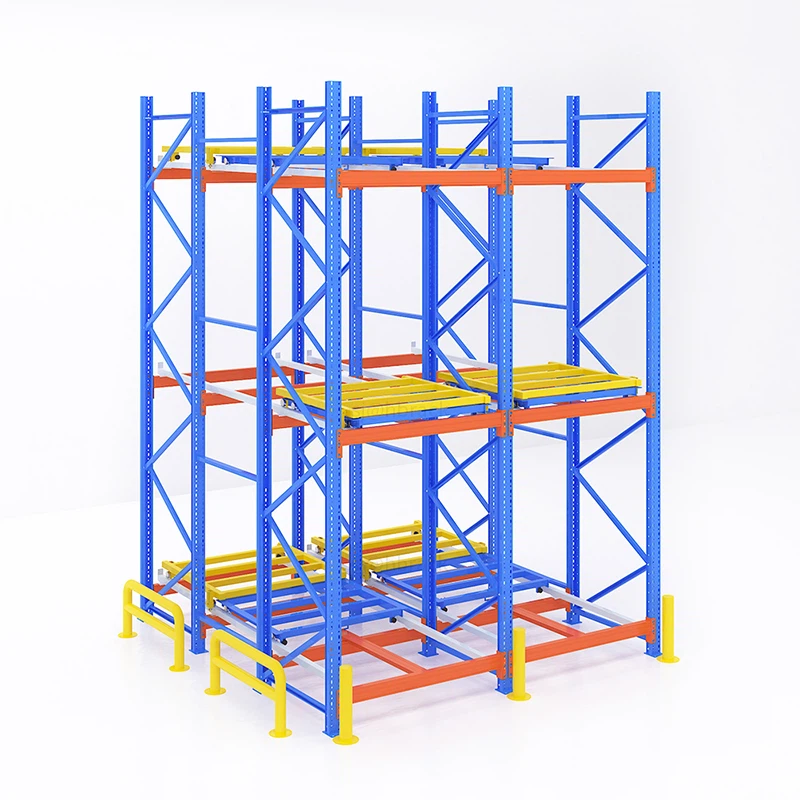

Assembly Safety
When you're assembling the racking, make sure you have a stable work area. Don't try to assemble the components on an uneven or slippery surface. Use sawhorses or other stable supports to hold the components in place while you're putting them together.
Work in teams if possible. Some of the racking components can be heavy and awkward to handle on your own. Having a team can make the assembly process safer and more efficient. Also, make sure everyone on the team knows what they're doing and follows the safety guidelines.
Anchor the Racking
Anchoring the push - back pallet racking to the floor is essential for safety. Anchors help to prevent the racking from moving or tipping over, especially when there's a lot of activity around it.
Follow the manufacturer's instructions for anchoring. Use the right type and size of anchors for your floor type. For example, if you have a concrete floor, you'll need concrete anchors. Make sure the anchors are installed correctly and tightened properly.
Clearance and Access
Once the racking is installed, make sure there's enough clearance around it. There should be a clear path for forklifts and other equipment to move safely. Don't stack pallets too close to the edges of the racking, as it could block the access or cause the racking to become unbalanced.
Also, ensure that there's easy access to the emergency exits in case of an emergency. You don't want the racking to block the way out.
Training
After the installation is complete, it's important to train the forklift operators and other warehouse staff on how to use the push - back pallet racking safely. They need to know the proper loading and unloading procedures, how to avoid overloading the racking, and what to do in case of an emergency.
Training should include both theoretical and practical sessions. The operators should be able to demonstrate that they know how to operate the equipment safely around the racking.
Regular Inspections
Even after the installation and training, the work isn't done. Regular inspections of the push - back pallet racking are necessary to ensure its continued safety. Inspect the racking for any signs of damage, such as bent beams, loose bolts, or worn - out components.
If you notice any issues during the inspection, address them immediately. Don't wait for a major problem to occur before taking action. Regular maintenance and inspections can extend the lifespan of the racking and keep your warehouse a safe place to work.
Now, if you're interested in learning more about our push - back pallet racking products, we've got some great resources for you. Check out our Two Pallet Deep Push Back Racking for a great option with a certain depth. If you need more storage capacity, take a look at our Three Pallet Deep Push Back Pallet Racks. And for a comprehensive view of our Push Back Racking System, click on the link.
If you're thinking about purchasing push - back pallet racking for your warehouse, don't hesitate to get in touch with us. We're here to help you choose the right system for your needs and ensure a safe and proper installation.
References
- Warehouse Safety Guidelines, Occupational Safety and Health Administration (OSHA)
- Manufacturer's Installation Manuals for Push - Back Pallet Racking


