

As a seasoned supplier of heavy-duty racks for warehouses, I've witnessed firsthand the critical role these storage solutions play in optimizing warehouse operations. The choice of materials for heavy-duty racks is a fundamental decision that can significantly impact the rack's performance, durability, and cost-effectiveness. In this blog post, I'll explore the most commonly used materials for heavy-duty warehouse racks, their unique properties, and the factors to consider when selecting the right material for your specific needs.
Steel
Steel is by far the most popular material for heavy-duty warehouse racks, and for good reason. It offers a unique combination of strength, durability, and versatility that makes it ideal for a wide range of applications. Here are some of the key advantages of using steel for heavy-duty racks:
- High Strength-to-Weight Ratio: Steel has an excellent strength-to-weight ratio, which means it can support heavy loads while using less material. This makes steel racks more cost-effective and easier to install compared to other materials.
- Durability: Steel is highly resistant to wear, corrosion, and impact, making it suitable for use in harsh warehouse environments. It can withstand heavy use, frequent handling, and exposure to moisture and chemicals without losing its structural integrity.
- Versatility: Steel can be easily fabricated into various shapes and sizes, allowing for customized rack designs to meet specific storage requirements. It can also be painted or coated to enhance its appearance and protect it from corrosion.
There are several types of steel commonly used for heavy-duty warehouse racks, including:
- Mild Steel: Mild steel is the most common type of steel used for racks. It is relatively inexpensive, easy to work with, and has good strength and ductility. However, it is more susceptible to corrosion than other types of steel and may require regular maintenance to prevent rusting.
- High-Strength Steel: High-strength steel is a more advanced type of steel that offers superior strength and durability compared to mild steel. It is often used in applications where heavy loads need to be supported or where space is limited. High-strength steel racks are typically more expensive than mild steel racks but can provide long-term cost savings due to their increased lifespan and reduced maintenance requirements.
- Galvanized Steel: Galvanized steel is steel that has been coated with a layer of zinc to protect it from corrosion. This makes it ideal for use in outdoor or humid environments where rusting is a concern. Galvanized steel racks are more expensive than non-galvanized steel racks but offer excellent long-term durability and require minimal maintenance.
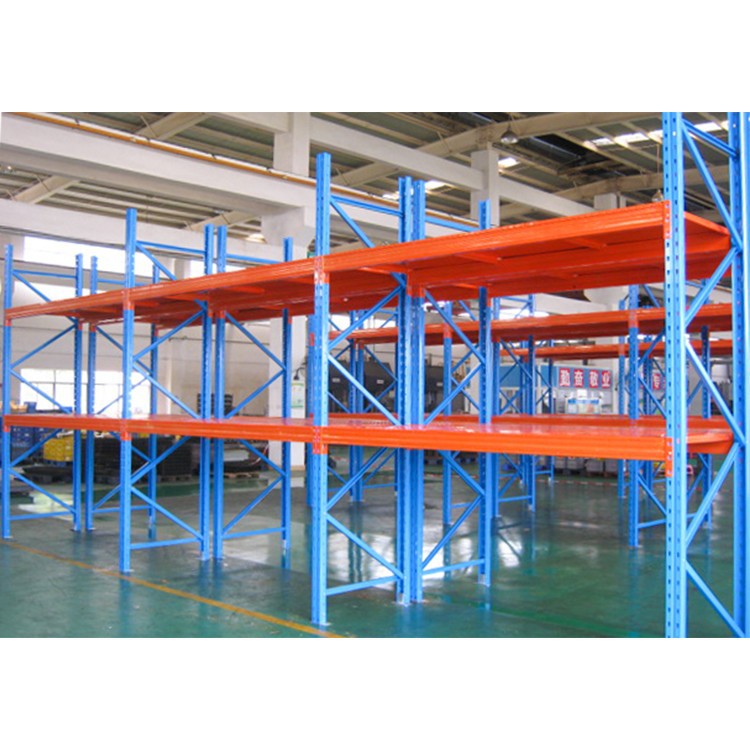
If you're interested in our Heavy Duty Metal Pallet Rack Shelves, which are made of high-quality steel, you can explore more details on our website.
Aluminum
Aluminum is another popular material for heavy-duty warehouse racks, especially in applications where weight is a concern. Here are some of the key advantages of using aluminum for heavy-duty racks:
- Lightweight: Aluminum is much lighter than steel, making it easier to handle and install. This can reduce labor costs and make it more suitable for use in applications where weight restrictions apply.
- Corrosion Resistance: Aluminum is naturally resistant to corrosion, making it ideal for use in outdoor or humid environments. It does not require painting or coating to protect it from rusting, which can save on maintenance costs.
- Aesthetic Appeal: Aluminum has a sleek, modern appearance that can enhance the overall look of a warehouse. It can be anodized or powder-coated to provide additional protection and a variety of color options.
However, aluminum also has some limitations compared to steel:
- Lower Strength: Aluminum has a lower strength-to-weight ratio than steel, which means it may not be suitable for applications where heavy loads need to be supported. Aluminum racks are typically used for lighter loads or in applications where space is limited.
- Higher Cost: Aluminum is generally more expensive than steel, which can make it less cost-effective for large-scale warehouse projects. However, the long-term cost savings due to reduced maintenance and energy costs may offset the initial higher investment.
Wood
Wood has been used for storage racks for centuries and is still a popular choice in some warehouse applications. Here are some of the key advantages of using wood for heavy-duty racks:
- Natural and Sustainable: Wood is a renewable resource that is biodegradable and has a low carbon footprint. It is a more environmentally friendly option compared to steel and aluminum.
- Low Cost: Wood is generally less expensive than steel and aluminum, making it a cost-effective option for small-scale warehouse projects or where budget is a concern.
- Easy to Work With: Wood can be easily cut, drilled, and assembled using basic tools, making it a popular choice for DIY projects or where custom rack designs are required.
However, wood also has some limitations compared to steel and aluminum:
- Limited Strength: Wood has a lower strength-to-weight ratio than steel and aluminum, which means it may not be suitable for applications where heavy loads need to be supported. Wood racks are typically used for lighter loads or in applications where space is limited.
- Susceptibility to Damage: Wood is more susceptible to damage from moisture, insects, and fire than steel and aluminum. It may require regular maintenance to prevent rot, decay, and infestation.
- Aesthetic Limitations: Wood has a natural appearance that may not be suitable for all warehouse environments. It may require staining or painting to enhance its appearance and protect it from the elements.
Composite Materials
Composite materials are a relatively new option for heavy-duty warehouse racks. They are made by combining two or more materials to create a material with unique properties. Here are some of the key advantages of using composite materials for heavy-duty racks:
- Customizable Properties: Composite materials can be designed to have specific properties, such as high strength, low weight, corrosion resistance, and fire resistance. This allows for customized rack designs to meet specific storage requirements.
- Durability: Composite materials are often more durable than traditional materials, such as steel, aluminum, and wood. They can withstand heavy use, frequent handling, and exposure to moisture and chemicals without losing their structural integrity.
- Low Maintenance: Composite materials require minimal maintenance compared to traditional materials. They do not rust, rot, or decay, and they are resistant to insects and fire.
However, composite materials also have some limitations compared to traditional materials:

- Higher Cost: Composite materials are generally more expensive than traditional materials, which can make them less cost-effective for large-scale warehouse projects.
- Limited Availability: Composite materials are not as widely available as traditional materials, which can make it difficult to find a supplier or replacement parts.
Factors to Consider When Selecting the Right Material
When selecting the right material for your heavy-duty warehouse racks, there are several factors to consider, including:
- Load Capacity: The load capacity of the racks is one of the most important factors to consider. You need to determine the maximum weight that the racks will need to support and choose a material that can handle that load.
- Environmental Conditions: The environmental conditions in your warehouse, such as temperature, humidity, and exposure to chemicals, can affect the performance and durability of the racks. You need to choose a material that is resistant to these conditions and can withstand the wear and tear of daily use.
- Space Requirements: The amount of space available in your warehouse will also affect the type of racks you choose. If you have limited space, you may need to choose a material that is lightweight and easy to install, such as aluminum or composite materials.
- Budget: Your budget is another important factor to consider. You need to choose a material that fits within your budget while still meeting your storage requirements.
Conclusion
In conclusion, the choice of material for heavy-duty warehouse racks depends on several factors, including load capacity, environmental conditions, space requirements, and budget. Steel is the most popular material for heavy-duty racks due to its high strength, durability, and versatility. Aluminum is a lightweight, corrosion-resistant option that is suitable for lighter loads and outdoor applications. Wood is a cost-effective option for small-scale projects or where a natural appearance is desired. Composite materials offer customizable properties and high durability but are generally more expensive and less widely available.
As a supplier of heavy-duty racks for warehouses, we offer a wide range of rack solutions made from different materials to meet your specific needs. Whether you need Heavy Duty Metal Pallet Rack Shelves, Outdoor Storage Hot-dip Galvanized Finished Pallet Rack, or Euro Pallet Storage Adjustable Pallet Racking Systems, we can provide you with high-quality products and professional advice.
If you're interested in learning more about our products or would like to discuss your specific storage requirements, please don't hesitate to contact us. We're here to help you find the best rack solution for your warehouse.
References
- "Warehouse Rack Design and Installation Guide." Industrial Storage Equipment Association.
- "Materials Selection for Industrial Storage Racks." American Institute of Steel Construction.
- "Aluminum vs. Steel in Warehouse Racking." Modern Materials Handling.
- "Wooden Racks: Pros and Cons." Warehouse Management Journal.
- "Composite Materials in Warehouse Storage." Composite Materials Association.


