
Hey there! As a supplier of Two Pallet Deep Push Back Racking, I've seen firsthand how this type of racking can have a significant impact on forklift operations. In this blog, I'm gonna break down the ins and outs of how it affects forklift operations, so let's dive right in.
What is Two Pallet Deep Push Back Racking?
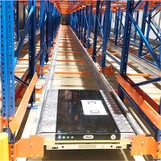
Before we get into the forklift stuff, let's quickly go over what Two Pallet Deep Push Back Racking is. It's a high - density storage system where pallets are stored two deep on each level. The pallets are placed on nested carts that can slide back on inclined rails. When a new pallet is loaded, it pushes the existing pallets back, and when you want to retrieve a pallet, the front - most one is removed, and the others roll forward. You can learn more about it Two Pallet Deep Push Back Racking.
Impact on Forklift Maneuverability
One of the first things you'll notice when using Two Pallet Deep Push Back Racking is the change in forklift maneuverability. Compared to traditional selective racking, the aisles can be a bit narrower. This is because the racking system itself takes up less space in the aisle for storage.
Narrower aisles mean that forklift operators need to be more precise in their movements. They can't just swing the forklift around as freely as they would in a wider aisle. For example, when entering the aisle to load or unload a pallet, the operator has to line up the forklift perfectly with the racking. Any small misalignment can lead to difficulties in placing or removing the pallet.
However, this isn't all bad. The reduced aisle width actually allows for more storage capacity in the same floor space. You can fit more racking rows in a warehouse, which is great for businesses looking to maximize their storage. But it does require forklift operators to have better skills and training.
Loading and Unloading Efficiency
Loading and unloading pallets in Two Pallet Deep Push Back Racking has its own set of pros and cons when it comes to efficiency.
On the plus side, loading is relatively straightforward. When you're loading a new pallet, you simply place it on the front of the racking. The cart system will push the existing pallets back automatically. This means that the loading process can be quite fast, especially if you have a continuous flow of pallets to load.
Unloading, on the other hand, can be a bit more complex. If you need to access a pallet that's not at the front, you first have to remove the front - most pallet. This can add some extra time to the retrieval process. But if your inventory management is well - organized and you know which pallets are likely to be needed first, you can minimize this issue.
It's also important to note that the efficiency of loading and unloading can be affected by the type of forklift you use. Some forklifts are better suited for this type of racking than others. For example, forklifts with a good reach and height capacity are essential for accessing the upper levels of the racking.
Forklift Type and Compatibility
Not all forklifts are created equal when it comes to working with Two Pallet Deep Push Back Racking. Different types of forklifts have different capabilities, and choosing the right one is crucial.
Reach trucks are a popular choice for this type of racking. They have the ability to reach into the racking and place or retrieve pallets at various heights. Their narrow design also makes them well - suited for the narrower aisles associated with Two Pallet Deep Push Back Racking.
Counterbalance forklifts can also be used, but they may require a bit more space in the aisle. They are generally better for heavier loads, but their turning radius can be a limitation in the narrower aisles.


It's important to consider the weight capacity of the forklift as well. The pallets in the racking can be quite heavy, especially if they are fully loaded. You need to make sure that the forklift you choose can handle the maximum weight of the pallets you'll be storing.
Safety Considerations
Safety is always a top priority when it comes to forklift operations, and Two Pallet Deep Push Back Racking has its own safety aspects to consider.
The narrow aisles mean that there's less room for error. If a forklift collides with the racking, it can cause damage not only to the racking but also to the pallets and their contents. To prevent this, it's important to have proper aisle markings and safety barriers.
When loading and unloading pallets, operators need to be careful not to over - load the carts in the racking. Overloading can cause the carts to malfunction or even derail from the rails. This can lead to a dangerous situation where pallets can fall and cause injury to the operator or damage to the warehouse.
Training is also essential. Operators should be trained on how to use the forklift in conjunction with the Two Pallet Deep Push Back Racking system. They need to know how to handle the unique challenges of loading, unloading, and maneuvering in the narrow aisles.
Comparison with Other Push Back Racking Systems
Two Pallet Deep Push Back Racking is just one option in the world of push back racking. There are also Three Pallet Deep Push Back Pallet Racks and Four Pallet Deep Push Back Racks Pallets.
Compared to three or four - pallet deep systems, two - pallet deep racking offers a bit more flexibility in terms of access. It's easier to get to the pallets you need, as there are fewer pallets in each lane. This can be beneficial if you have a high - turnover inventory where you need to access pallets frequently.
However, three or four - pallet deep systems can offer even higher storage density. If you have a large amount of inventory that doesn't need to be accessed as often, these systems might be a better choice. But they also come with their own challenges, such as longer retrieval times and more complex loading and unloading processes.
Conclusion and Call to Action
In conclusion, Two Pallet Deep Push Back Racking can have a significant impact on forklift operations. It offers benefits such as increased storage density and potentially faster loading times, but it also comes with challenges in terms of maneuverability, unloading efficiency, and safety.
If you're considering implementing Two Pallet Deep Push Back Racking in your warehouse, it's important to carefully evaluate your forklift fleet, your inventory management needs, and your operator training. We're here to help you make the right decision. Whether you have questions about the racking system itself or need advice on forklift compatibility, our team of experts is ready to assist you. Reach out to us to start a conversation about how Two Pallet Deep Push Back Racking can work for your business.
References
- Material Handling Industry of America (MHIA) publications on pallet racking systems.
- Forklift manufacturer manuals and guidelines for different forklift types.
- Warehouse safety standards and regulations.