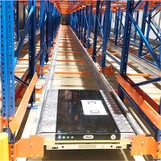

In the realm of warehouse storage solutions, the choice between different racking systems can significantly impact operational efficiency, space utilization, and overall productivity. Two popular options that often come under consideration are two pallet deep push back racking and drive - in racking. As a supplier of Two Pallet Deep Push Back Racking, I am well - versed in the features, advantages, and limitations of both systems, and I'd like to provide a comprehensive comparison to help you make an informed decision.
Understanding Two Pallet Deep Push Back Racking
Two pallet deep push back racking is a high - density storage system that operates on a first - in, last - out (FILO) principle. It consists of a series of inclined rails with nested carts. Pallets are loaded onto the carts at the front of the rack, and as new pallets are added, they push the existing pallets back along the inclined rails. This system allows for the storage of multiple pallets deep within each lane, effectively increasing storage density.
One of the key advantages of Two Pallet Deep Push Back Racking is its relatively high selectivity. Compared to some other high - density storage systems, it offers a better balance between storage density and the ability to access individual pallets. With a two - pallet deep configuration, you can still retrieve pallets from the front of the lane without having to move other pallets out of the way, which is beneficial for warehouses with a mix of fast - moving and slow - moving inventory.
Another benefit is its ease of installation and maintenance. The modular design of push back racking systems allows for quick and straightforward installation, and the mechanical components are relatively simple and easy to service. This can result in lower downtime and reduced maintenance costs over the long term.
Understanding Drive - In Racking
Drive - in racking, on the other hand, is a very high - density storage system that operates on a last - in, first - out (LIFO) principle. It features a series of upright frames and horizontal rails that create a continuous storage lane. Forklifts can drive directly into the racking structure to deposit and retrieve pallets. This system is designed to maximize storage density by eliminating the need for aisles between storage lanes.
The primary advantage of drive - in racking is its extremely high storage density. It can store a large number of pallets in a relatively small footprint, making it an ideal choice for warehouses with limited space and a large volume of homogeneous inventory. Since there are no aisles between lanes, more floor space can be dedicated to storage, resulting in a significant increase in storage capacity.
However, drive - in racking also has some limitations. Its selectivity is relatively low compared to push back racking. In a drive - in system, pallets are stored in a LIFO manner, which means that the last pallet loaded is the first one to be retrieved. This can be a drawback for warehouses with inventory that has an expiration date or where first - in, first - out (FIFO) inventory management is required. Additionally, the forklift operation within the racking structure can be more challenging and time - consuming, which may impact overall productivity.
Comparison of Key Factors
Storage Density
Both two pallet deep push back racking and drive - in racking are designed to maximize storage density, but drive - in racking generally offers a higher density. Drive - in racking can store pallets in a continuous lane without the need for aisles, allowing for a more efficient use of floor space. In contrast, push back racking still requires some space for the inclined rails and the movement of pallets within the lanes, which results in a slightly lower storage density.
However, it's important to note that the actual storage density of both systems can be influenced by factors such as pallet size, load weight, and the layout of the warehouse. In some cases, the difference in storage density may not be as significant as expected, especially if the warehouse has a complex layout or if the pallets are of irregular sizes.
Selectivity
Selectivity refers to the ability to access individual pallets without having to move other pallets out of the way. Two pallet deep push back racking offers a higher level of selectivity compared to drive - in racking. With push back racking, you can access the front two pallets in each lane without disturbing the others, which is suitable for warehouses with a variety of inventory SKUs.
In a drive - in racking system, pallets are stored in a LIFO manner, which means that you need to remove all the pallets in front of the target pallet to access it. This can be a problem for warehouses that require FIFO inventory management or have a high turnover of inventory.
Forklift Compatibility
Both systems require specific forklift operations. For Two Pallet Deep Push Back Racking, standard counterbalance forklifts can be used, and the operation is relatively straightforward. The forklift only needs to load and unload pallets at the front of the lane, without having to enter the racking structure.
In the case of drive - in racking, specialized forklifts, such as reach trucks or very narrow aisle (VNA) forklifts, are often required. These forklifts need to drive directly into the racking lanes, which requires more skill and precision from the operators. The maneuverability of the forklift within the drive - in lanes can also be a challenge, especially when dealing with heavy or large pallets.
Installation and Maintenance
Two pallet deep push back racking is generally easier to install and maintain compared to drive - in racking. The modular design of push back racking allows for quick assembly and disassembly, and the mechanical components are relatively simple and easy to access for maintenance.
Drive - in racking, on the other hand, requires more precise installation to ensure the stability and safety of the structure. The forklift operation within the racking lanes can also cause more wear and tear on the system, which may require more frequent maintenance and repairs.
Cost
The cost of both systems can vary depending on factors such as the size of the warehouse, the number of pallets to be stored, and the specific requirements of the application. In general, drive - in racking may have a lower upfront cost due to its simpler design and the elimination of aisles. However, the long - term cost of drive - in racking may be higher due to the need for specialized forklifts, more frequent maintenance, and potential productivity losses.
Two pallet deep push back racking may have a higher upfront cost, but it offers better selectivity and easier maintenance, which can result in lower long - term costs. Additionally, the ability to access individual pallets more easily can improve overall productivity and reduce the risk of inventory damage.
Which System is Right for You?
The choice between two pallet deep push back racking and drive - in racking depends on several factors, including your inventory characteristics, warehouse layout, budget, and operational requirements.


If you have a large volume of homogeneous inventory with a low turnover rate and limited space, drive - in racking may be the better option. It offers the highest storage density and can help you make the most of your available floor space.
On the other hand, if you have a mix of fast - moving and slow - moving inventory, require FIFO inventory management, or need a higher level of selectivity, two pallet deep push back racking may be more suitable. It provides a better balance between storage density and access to individual pallets, which can improve overall operational efficiency.
As a supplier of Two Pallet Deep Push Back Racking, I can offer you a comprehensive consultation to assess your specific needs and recommend the most appropriate storage solution for your warehouse. Our team of experts can help you with the design, installation, and maintenance of the racking system, ensuring that you get the best possible results.
If you are interested in learning more about our Push Back Pallet Rack System or would like to discuss your storage requirements in detail, please feel free to contact us. We are committed to providing you with high - quality products and excellent customer service. Let's work together to optimize your warehouse storage and improve your business efficiency.
References
- "Warehouse Racking Systems: A Comprehensive Guide." Material Handling Industry of America.
- "Comparison of High - Density Storage Systems." Logistics Management Journal.
- "Best Practices for Warehouse Storage Design." Supply Chain Digest.