

When it comes to optimizing warehouse space and efficiency, the Three Pallet Deep Push Back Pallet Racks stand out as a remarkable solution. As a supplier of these innovative racks, I have witnessed firsthand how proper design of the logistics flow around them can significantly enhance a warehouse's overall performance. In this blog, I will share insights on how to effectively design the logistics flow around Three Pallet Deep Push Back Pallet Racks.
Understanding the Basics of Three Pallet Deep Push Back Pallet Racks
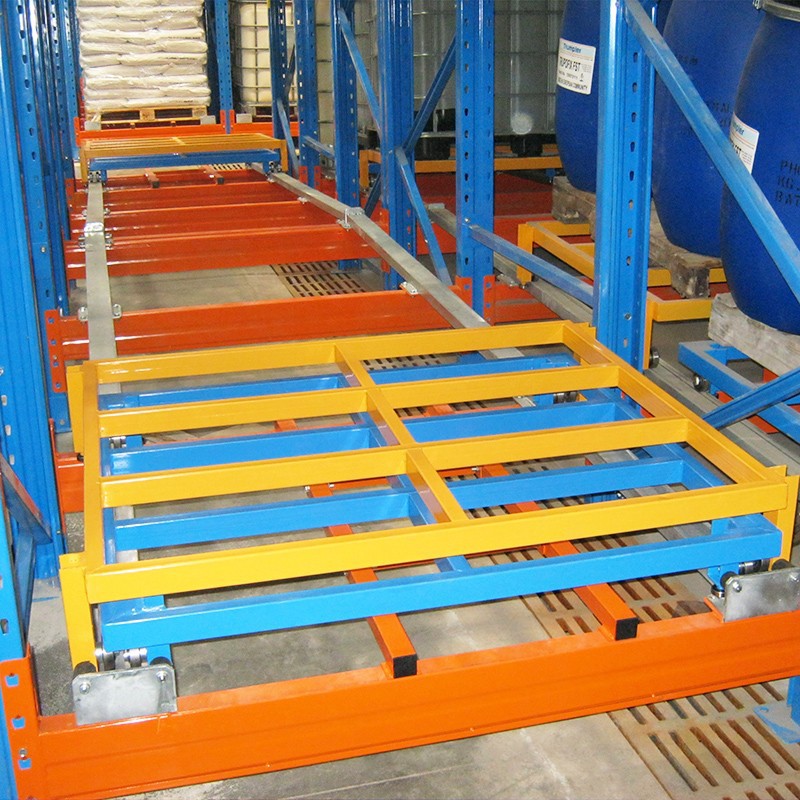
Before delving into the logistics flow design, it's essential to understand what Three Pallet Deep Push Back Pallet Racks are. These racks allow pallets to be stored three deep, with the use of nested carts that are mounted on inclined rails. When a new pallet is loaded, it pushes the existing pallets back, and when unloading, the pallets move forward towards the picking face. This system provides a high - density storage solution while maintaining a reasonable level of selectivity.
Assessing Warehouse Space and Requirements
The first step in designing the logistics flow is to thoroughly assess the warehouse space and specific requirements. Consider the size of the warehouse, the types of products to be stored, the volume of incoming and outgoing goods, and the available labor and equipment. For example, if your warehouse deals with a large number of fast - moving consumer goods, you need to ensure that the logistics flow can accommodate the high turnover rate.
Measure the available floor space accurately. Calculate the dimensions of the areas where the Three Pallet Deep Push Back Pallet Racks will be installed. Leave sufficient space around the racks for aisle operations, such as forklift maneuvering. A common mistake is to install racks too close together, which can lead to congestion and safety hazards.
Inbound Logistics Flow
The inbound logistics flow involves the movement of goods from the receiving area to the storage racks. When designing this flow, start by creating a dedicated receiving area near the warehouse entrance. This area should be large enough to handle the incoming pallets efficiently. Use proper receiving equipment, such as conveyor belts or pallet jacks, to move the pallets from the trucks to a staging area.
Once the pallets are staged, use forklifts to transport them to the Push Back Pallet Rack System. The forklift operator should be trained to load the pallets onto the push - back carts carefully. Place the pallets in the correct order, starting from the innermost position of the three - deep configuration. This ensures that the first - in, last - out (FILO) inventory management principle is followed, which is appropriate for products with a long shelf - life.
Storage Considerations
When arranging the products in the Three Pallet Deep Push Back Pallet Racks, consider the product characteristics. Group similar products together to improve picking efficiency. For example, products with the same SKU or those that are frequently ordered together should be stored in adjacent locations on the racks.
Also, take into account the weight and size of the pallets. Heavier pallets should be placed at the bottom levels of the racks to ensure stability. Pallets with larger dimensions should be stored in areas where there is enough space to accommodate them without causing any interference with neighboring pallets.
Outbound Logistics Flow
The outbound logistics flow is about moving the goods from the storage racks to the shipping area. Designate a clear picking path for the forklift operators. They should be able to access the pallets easily without causing any disruptions to the other stored pallets.
Use a picking system, such as order - picking or batch - picking, depending on the nature of your business. In order - picking, the operator picks the pallets for a single order at a time, while in batch - picking, multiple orders are picked simultaneously. The chosen picking method should be efficient and minimize the travel time of the forklift within the warehouse.

Once the pallets are picked, transport them to the shipping area. Ensure that the shipping area is organized and has sufficient space for loading the pallets onto the trucks. Use proper loading equipment, such as dock levelers and conveyor systems, to speed up the loading process.
Traffic Flow Management
Traffic flow management is crucial in a warehouse with Three Pallet Deep Push Back Pallet Racks. Design one - way aisles to prevent forklift collisions and improve traffic efficiency. Mark the aisles clearly with floor markings and signs.
Establish a traffic hierarchy. For example, forklifts carrying pallets should have priority over those moving without loads. This helps to maintain a smooth flow of traffic and reduces the time spent waiting in congested areas.
Integration with Other Warehouse Systems
The logistics flow around the Three Pallet Deep Push Back Pallet Racks should be integrated with other warehouse systems, such as inventory management systems and warehouse management systems (WMS). These systems can provide real - time information about the pallet locations, inventory levels, and order status.
By integrating with the WMS, the forklift operators can receive pick and put - away instructions directly on their devices. This reduces errors and improves the overall efficiency of the warehouse operations.
Safety Measures
Safety should always be a top priority when designing the logistics flow. Install safety features around the Three Pallet Deep Push Back Pallet Racks, such as column protectors to prevent damage from forklift impacts. Provide proper lighting in the aisles and around the racks to ensure good visibility for the operators.
Train the warehouse staff on safety procedures, including proper forklift operation, pallet handling, and emergency response. Regularly inspect the racks and the associated equipment to identify and fix any potential safety hazards.
Monitoring and Optimization
Once the logistics flow is designed and implemented, it's important to monitor its performance regularly. Use key performance indicators (KPIs) such as order fulfillment time, inventory accuracy, and forklift utilization rate to evaluate the effectiveness of the logistics flow.
Collect data on the movement of pallets, the time taken for various operations, and any bottlenecks in the system. Based on the data analysis, make adjustments to the logistics flow as needed. For example, if you find that a particular aisle is frequently congested, you may need to re - evaluate its width or the traffic rules.
In conclusion, designing the logistics flow around Three Pallet Deep Push Back Pallet Racks requires a comprehensive approach that takes into account various factors such as warehouse space, product characteristics, and safety. By following the guidelines outlined in this blog, you can optimize the warehouse operations and improve the overall efficiency of your business.
If you are interested in learning more about our Push Back Racking System or have any questions regarding the design of the logistics flow around Three Pallet Deep Push Back Pallet Racks, please don't hesitate to contact us for a detailed discussion and potential procurement. We are committed to providing the best solutions for your warehouse needs.
References
- "Warehouse Design and Planning" by John A. White
- "Logistics and Supply Chain Management" by Martin Christopher


