

Hey there! I'm a supplier of Wide Aisle Adjustable Pallet Racking, and today I want to chat about the installation challenges we often face with this type of racking system.
Site Preparation Hurdles
First off, site preparation can be a real pain in the neck. Before we even start putting up the racks, the floor needs to be in top - notch condition. Uneven floors are a major headache. If the floor has slopes, bumps, or dips, it can throw off the entire installation process. For instance, a slope of just a few degrees can cause the racks to be unstable. The uprights might not stand perfectly vertical, which can lead to issues with load - bearing capacity later on.
We once had a project where the warehouse floor had some hidden dips. We thought we had done a thorough inspection, but as we started installing the first few uprights, we noticed they weren't sitting right. It turned out there were small depressions in the concrete that were hard to detect visually. We had to spend extra time leveling the floor using shims. This not only added time to the installation but also increased the cost.
Another aspect of site preparation is making sure there's enough space. Sometimes, the warehouse layout is so cluttered that it's difficult to maneuver the installation equipment. Forklifts need enough room to move around and lift the heavy racking components. If there are other storage items or machinery in the way, we have to either move them temporarily or find a creative way to work around them.
Component Assembly Complications
The components of wide aisle adjustable pallet racking are not always a breeze to assemble. The uprights, beams, and connectors need to fit together precisely. Sometimes, the holes in the uprights and beams don't line up perfectly. This could be due to manufacturing tolerances or minor damage during transportation.
For example, we had a set of beams where the holes were slightly off - center. We had to use some force to align them with the uprights, and in the process, we risked damaging the components. This was a time - consuming process as we had to double - check the alignment at every step to ensure the racking would be stable.
The connectors are also a critical part of the assembly. They need to be securely fastened to hold the weight of the pallets and the goods. However, in some cases, the connectors can be difficult to install. They might be a bit too tight or too loose. If they're too tight, it can be hard to get them into place without the right tools. And if they're too loose, the racking won't be as stable as it should be.
Safety and Compliance Concerns
Safety is always a top priority during installation. We need to make sure that all the workers are following the safety protocols. This includes wearing the appropriate safety gear like hard hats, safety glasses, and steel - toed boots. But getting everyone to follow these rules all the time can be a challenge.
There are also strict compliance regulations regarding the installation of pallet racking. For example, the racking needs to be installed at the correct height and with the right clearances. We have to make sure that there's enough space between the racks and the sprinkler systems in case of a fire. If we don't meet these regulations, we could face fines or even have to redo the installation.
Once, we were installing a racking system in a warehouse that had a new set of local safety regulations. We had to do some research on the fly to make sure we were in compliance. This added an extra layer of complexity to the installation process and required us to be more vigilant about every detail.
Height and Accessibility Issues
Wide aisle adjustable pallet racking can be quite tall, especially in large warehouses. Working at height is always a challenge. We need to use ladders or scissor lifts to reach the higher parts of the racking for installation. This requires special training for the workers, and there's always a risk of falls.
Accessibility can also be an issue. If the warehouse has low ceilings or narrow aisles, it can be difficult to use the necessary equipment to install the higher levels of the racking. We might have to use smaller, more maneuverable equipment, which can be less efficient.
In one project, the warehouse had a low ceiling. We couldn't use our regular scissor lift because it was too tall. We had to rent a smaller, specialized lift that was more expensive and took longer to set up. This not only increased the cost but also slowed down the installation process.
Coordination with Other Contractors
In some cases, we're not the only ones working in the warehouse. There might be other contractors doing electrical work, plumbing, or other construction tasks. Coordinating with them can be a real challenge.
For example, if the electrical contractors are working on installing new lighting fixtures at the same time as we're installing the racking, there could be conflicts. We might need to access areas where they're working, or vice versa. This requires good communication and a well - planned schedule.
We once had a project where the plumbing contractors were doing some major pipe installations in the same area where we were putting up the racking. We had to work out a detailed schedule to make sure that our work didn't interfere with each other. There were a few misunderstandings at first, but once we got everything sorted out, the installation went more smoothly.
Solutions to Overcome These Challenges
Despite these challenges, there are ways to overcome them. For site preparation, we can do more in - depth inspections using advanced tools like laser levelers to detect any floor irregularities early on. We can also work closely with the warehouse owners to clear the area and ensure there's enough space for installation.
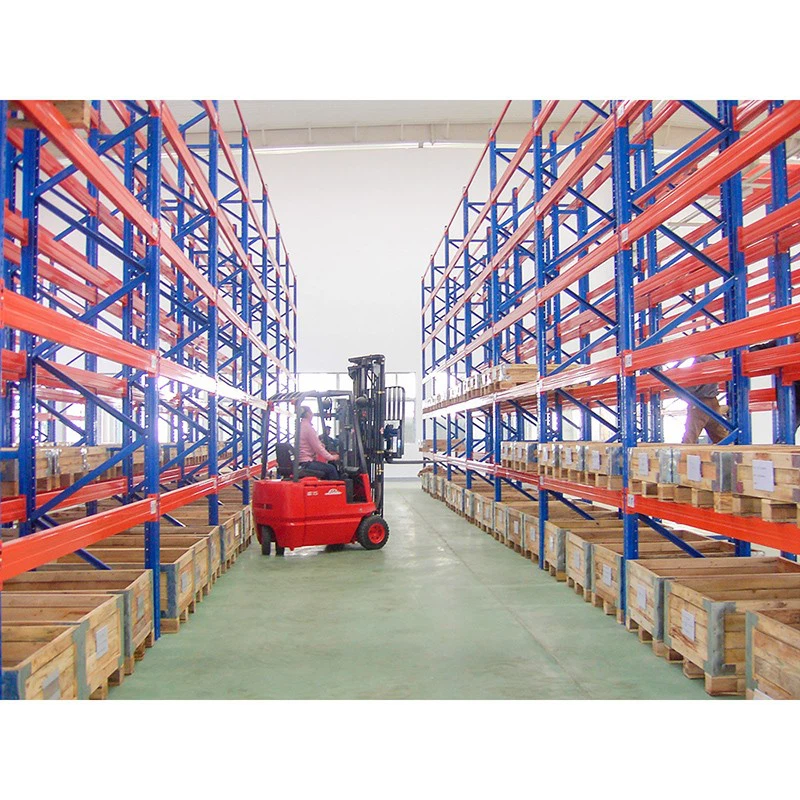

When it comes to component assembly, we can have a quality control process in place before the components leave the factory. This can reduce the chances of misaligned holes or faulty connectors. And during installation, we can use the right tools and techniques to ensure a proper fit.
To address safety and compliance concerns, we can provide regular safety training for our workers and stay up - to - date with the latest regulations. We can also have a dedicated safety officer on - site to monitor the installation process.
For height and accessibility issues, we can invest in a variety of equipment to handle different warehouse layouts. And for coordination with other contractors, we can set up regular meetings to discuss the progress and any potential conflicts.
If you're in the market for Wide Aisle Adjustable Pallet Racking, we've got you covered. We offer a range of options like Outdoor Storage Hot - dip Galvanized Finished Pallet Rack, Euro Pallet Storage Adjustable Pallet Racking Systems, and Warehouse Storage Pallet Rack with Wire Decking.
If you're interested in purchasing our products or want to discuss your specific requirements, don't hesitate to reach out. We're here to help you find the best solution for your warehouse storage needs.
References
- Industry standards for pallet racking installation
- Past project records and case studies


