
As a supplier of upright frame bracing, I've had the privilege of engaging with various industries and understanding the nuances of storage solutions. Upright frame bracing is a crucial component in warehouse racking systems, providing stability and support to the entire structure. However, like any other product, it comes with its own set of potential problems that users should be aware of.

Structural Integrity Concerns
One of the primary issues with upright frame bracing is related to its structural integrity. Over time, the bracing can experience wear and tear due to constant loading and unloading of pallets. This can lead to weakened connections between the braces and the upright frames, increasing the risk of structural failure. For instance, if the bracing is not properly installed or if it has been subjected to excessive stress, the welds or bolts holding it in place may start to loosen. This can compromise the overall stability of the racking system and pose a significant safety hazard to warehouse workers.
Another aspect of structural integrity is the potential for corrosion. In environments where the humidity is high or where the bracing is exposed to chemicals, corrosion can occur. Corrosion weakens the metal, reducing its strength and load - bearing capacity. This can make the upright frame bracing more prone to bending or breaking under normal operating conditions. To mitigate this risk, it's essential to use high - quality, corrosion - resistant materials and to implement regular maintenance and inspection programs.
Compatibility Issues
Upright frame bracing needs to be compatible with the specific racking system it is intended for. There are different types of racking systems, such as selective racking, drive - in racking, and push - back racking, each with its own unique design and load - bearing requirements. If the bracing is not properly matched to the racking system, it may not provide the necessary support. For example, a bracing system designed for light - duty selective racking may not be suitable for a heavy - duty drive - in racking system. This can lead to overloading of the bracing, which can result in premature failure.
Moreover, compatibility also extends to the pallets used in the racking system. The size and weight of the pallets can affect the performance of the upright frame bracing. If the pallets are too large or too heavy for the bracing to support, it can cause excessive stress on the bracing and the upright frames. This can lead to deformation of the bracing and potentially damage the entire racking system.
Installation Challenges
Proper installation of upright frame bracing is critical for its effective performance. However, installation can be a complex process that requires skilled labor and specialized tools. Incorrect installation can lead to a variety of problems. For example, if the bracing is not installed at the correct angle or if the connections are not tightened properly, it can affect the stability of the racking system. This can result in uneven loading on the upright frames, increasing the risk of structural failure.
In addition, installation in existing warehouses can be particularly challenging. There may be limited space, making it difficult to maneuver the bracing into place. There may also be obstacles such as columns or pipes that need to be worked around. These challenges can lead to installation errors, which can have serious consequences for the safety and functionality of the racking system.
Lack of Standardization
The lack of standardization in the upright frame bracing industry can also be a problem. Different manufacturers may have their own unique designs and specifications for bracing, which can make it difficult for users to compare products and ensure compatibility. This lack of standardization can also lead to confusion during the installation and maintenance processes. For example, if a user needs to replace a damaged bracing and cannot find an exact match, they may have to settle for a substitute that may not be fully compatible with their racking system.
Impact Resistance
Warehouse environments are often busy and dynamic, with forklifts and other equipment moving in and out of the racking areas. Upright frame bracing needs to be able to withstand the impact of accidental collisions. However, not all bracing systems are designed with sufficient impact resistance. A single collision with a forklift can damage the bracing, compromising its ability to support the racking system.
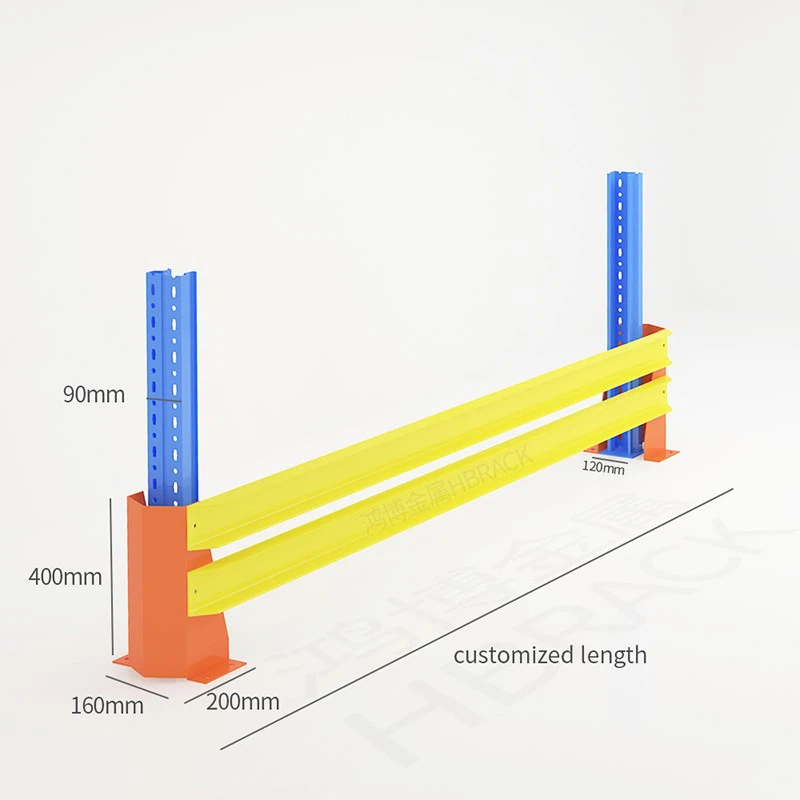
To address this issue, additional protective measures can be taken. For example, End Frame Protector can be installed at the ends of the racking system to absorb the impact of collisions and protect the upright frames and bracing. Similarly, L Shape Upright Front Protector can be used to protect the front of the upright frames from damage.
Maintenance Requirements
Upright frame bracing requires regular maintenance to ensure its long - term performance. This includes visual inspections to check for signs of damage, corrosion, or loose connections. However, in many warehouses, maintenance may be overlooked due to time constraints or lack of resources. Neglecting maintenance can allow small problems to escalate into major issues, leading to costly repairs or even replacement of the entire racking system.
In addition to visual inspections, lubrication of moving parts (if any) and tightening of bolts may also be required. If these maintenance tasks are not carried out on a regular basis, the bracing may become less effective over time.
Load Distribution
Proper load distribution is essential for the performance of upright frame bracing. If the loads are not evenly distributed across the racking system, it can put excessive stress on certain areas of the bracing. For example, if pallets are consistently placed on one side of a rack, the bracing on that side will be subjected to more stress than the bracing on the other side. This can lead to uneven wear and tear and increase the risk of failure.
To ensure proper load distribution, it's important to train warehouse workers on the correct way to load pallets onto the racking system. Additionally, using H Shape Pallet Support Bar can help to distribute the weight of the pallets more evenly across the bracing and the upright frames.
Despite these potential problems, upright frame bracing remains an essential part of warehouse racking systems. By being aware of these issues and taking proactive measures to address them, users can ensure the safety and efficiency of their racking systems.
If you are facing challenges with your upright frame bracing or are in the process of setting up a new racking system, I encourage you to reach out for a detailed discussion. Our team of experts is well - versed in the intricacies of upright frame bracing and can provide you with customized solutions to meet your specific needs. Contact us today to start the procurement and negotiation process.
References
- "Warehouse Rack Design and Safety" by the Rack Manufacturers Institute.
- "Structural Engineering for Storage Racks" by various industry experts.


