

As a seasoned steel shelf supplier, I often encounter inquiries from clients about the standard thickness of steel used in steel shelves. This is a crucial aspect that directly impacts the shelves' durability, load - bearing capacity, and overall performance. In this blog, I'll delve into the details of the standard steel thickness for steel shelves, taking into account different types of shelves and their applications.
Understanding the Basics of Steel Shelf Thickness
The thickness of steel used in steel shelves is measured in gauge or millimeters. A lower gauge number indicates a thicker steel sheet. For example, 10 - gauge steel is thicker than 18 - gauge steel. In the metric system, common thicknesses range from 0.5mm to 3mm or even more, depending on the requirements.
Factors Influencing Steel Thickness
Load - Bearing Capacity
One of the primary factors determining the steel thickness is the intended load - bearing capacity of the shelf. Shelves designed to hold light - weight items, such as small parts in a workshop or office supplies, can use thinner steel. A thickness of around 0.8mm to 1.2mm might be sufficient for these applications. On the other hand, heavy - duty industrial shelves that need to support large pallets of goods or heavy machinery parts require much thicker steel. For such heavy - duty shelves, a thickness of 2mm to 3mm or even more may be necessary.
Shelf Size
The size of the shelf also plays a role in determining the appropriate steel thickness. Larger shelves need to be more structurally stable to prevent sagging. A long and wide shelf with a large surface area will require a thicker steel gauge to maintain its shape under load. For instance, a narrow, short shelf can get away with a thinner steel, while a wide and tall shelving unit will demand a sturdier construction.
Shelf Type
There are various types of steel shelves, including pallet racks, cantilever racks, and wire mesh shelves, each with its own thickness requirements.
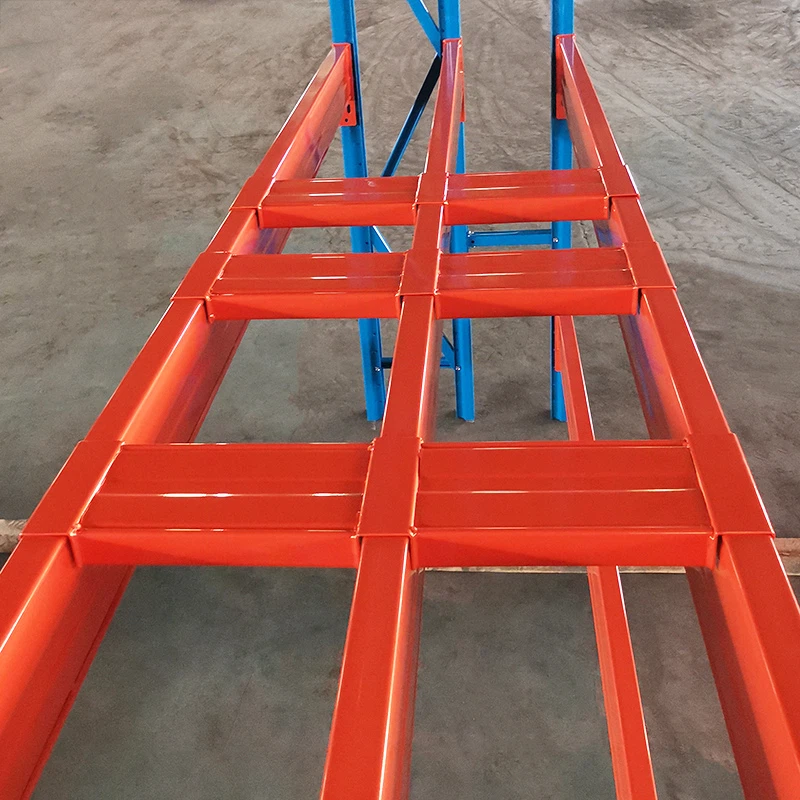
- Pallet Racks: These are commonly used in warehouses to store pallets. They are subject to significant vertical and horizontal forces. The upright frames of pallet racks typically use steel with a thickness of 1.5mm to 3mm, while the beams may have a thickness of 1.2mm to 2.5mm. For additional strength, some pallet racks may feature Big Width Pallet Support Bar which can help distribute the load more evenly.
- Cantilever Racks: Ideal for storing long and bulky items like pipes, lumber, or steel bars. The arms of cantilever racks need to be strong enough to support the weight of the items without bending. Steel thickness for the arms can range from 2mm to 3mm, and the upright columns may have a thickness of 2.5mm to 3.5mm.
- Wire Mesh Shelves: These are often used in retail and light - industrial settings. They are relatively lightweight and can use thinner steel wire, usually around 1mm to 1.5mm. However, the frame of wire mesh shelves may have a steel thickness of 1.2mm to 2mm for stability.
Industry Standards for Steel Shelf Thickness
In the industry, there are certain standards that help guide the selection of steel thickness for different types of shelves. For example, in North America, the Rack Manufacturers Institute (RMI) provides guidelines on the design, testing, and installation of industrial storage racks. These guidelines take into account factors such as load capacity, seismic activity in the area, and the type of goods being stored.
European standards, such as those set by the FEM (Federation Europeenne de la Manutention), also offer similar guidance. Adhering to these standards ensures that the steel shelves are safe and reliable for their intended use.
Quality Assurance and Steel Thickness
As a steel shelf supplier, ensuring the correct steel thickness is just one part of the quality assurance process. We also need to consider the quality of the steel itself. High - quality steel with proper chemical composition and mechanical properties is essential for long - lasting shelves.
We conduct regular inspections during the manufacturing process to verify the steel thickness. This includes using calipers to measure the thickness at various points on the shelves to ensure consistency. In addition, we perform load - testing on sample shelves to ensure that they can withstand the specified load capacity.
Safety Considerations
Safety is of utmost importance when it comes to steel shelves. Using the correct steel thickness helps prevent accidents such as shelf collapse. Overloading a shelf made of thin steel can lead to bending, warping, and ultimately, failure.
To enhance safety, we also offer accessories such as 3 Inch Hole Step Beam End Safety Clip which helps secure the beams to the upright frames, and [Round Tube End Frame Protector](https://www. ab.com/rack-parts/round-tube-end-frame-protector.html) to protect the frames from damage in high - traffic areas.
Cost - Benefit Analysis
While thicker steel generally means a more durable and reliable shelf, it also comes at a higher cost. As a supplier, we work closely with our clients to find the right balance between cost and performance. For some applications, a slightly thinner steel may be acceptable if it meets the basic requirements and the budget is tight. However, for critical applications where safety and long - term performance are paramount, investing in thicker steel is often the best choice.
Conclusion
Determining the standard thickness of steel used in steel shelves is a complex process that involves considering factors such as load - bearing capacity, shelf size, shelf type, and industry standards. As a steel shelf supplier, we are committed to providing our clients with high - quality shelves that meet their specific needs.

If you are in the market for steel shelves and need more information on the appropriate steel thickness for your application, or if you have any other questions about our products, we invite you to reach out to us. Our team of experts is ready to assist you in making the right choice for your storage requirements. Let's start a conversation and find the perfect steel shelf solution for you.
References
- Rack Manufacturers Institute (RMI) Standards
- Federation Europeenne de la Manutention (FEM) Guidelines
- Industry research on steel shelf manufacturing and performance


