

Hey there! As a supplier of shuttle racking systems, I often get asked about the heat dissipation requirements for these nifty setups. So, let's dive right in and break it down.
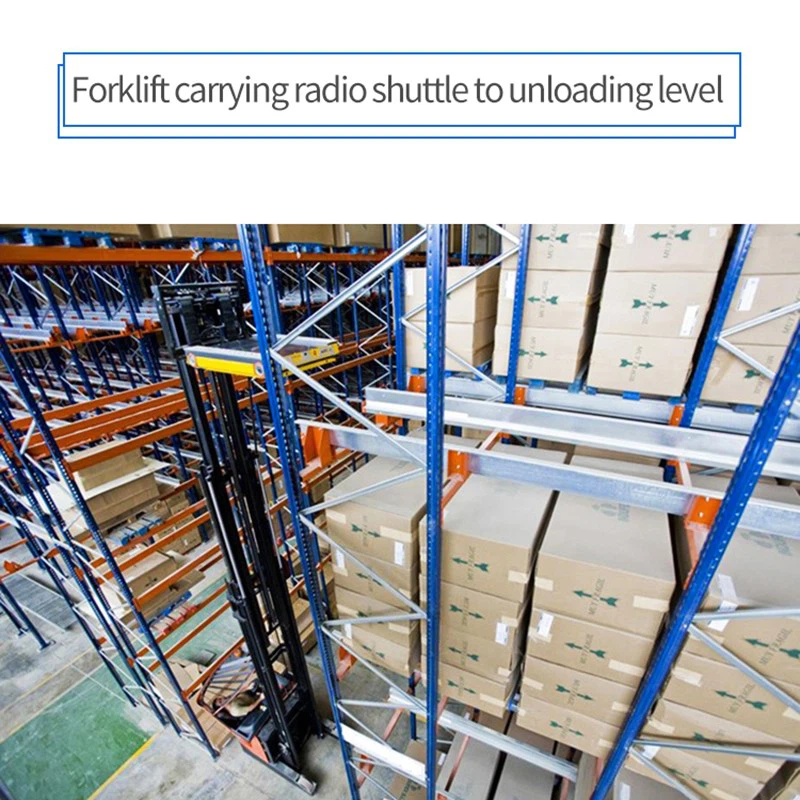
First off, what exactly is a shuttle racking system? Well, it's a high - density storage solution that uses shuttles to move pallets along the racking channels. It's super efficient for warehouses, allowing for quick access to stored goods. We've got some great options like the 1200kg Unit Load Storage Shuttle Pallet Racking System, Semi Auto Storage Warehouse Racking System, and FIFO and FILO High Density Storage Shuttle Racking System.
Now, why is heat dissipation important in a shuttle racking system? You see, the shuttles in these systems are powered by batteries or electric motors. When these components work, they generate heat. If this heat isn't properly dissipated, it can cause a whole bunch of problems.
One major issue is battery life. Batteries are sensitive to temperature. If they get too hot, their chemical reactions speed up in an unwanted way. This can lead to a shorter lifespan for the batteries. You don't want to be replacing batteries all the time, right? It's not only costly but also disrupts the smooth operation of your warehouse.
Another problem is with the electric motors. Overheating can cause the insulation on the motor windings to break down. Once that happens, you're looking at short - circuits, motor failures, and a whole lot of downtime. And in a busy warehouse, downtime is a big no - no.
So, what are the heat dissipation requirements?
Airflow
Good airflow is key. The shuttle racking system should be installed in an area where there is sufficient natural or forced airflow. In a warehouse, you can use ventilation fans to ensure that the air is constantly moving around the shuttles and the racking. The air should be able to flow freely through the channels of the racking, carrying away the heat generated by the shuttles.
You also need to make sure that there aren't any obstructions around the racking. Things like stacked pallets or other equipment blocking the airflow can cause hot spots to form. These hot spots can damage the shuttles and the racking over time.
Temperature Monitoring
It's a good idea to have a temperature monitoring system in place. This can be as simple as a few temperature sensors placed at strategic locations around the shuttle racking system. These sensors can give you real - time data on the temperature. If the temperature starts to rise above a safe level, you can take action immediately.
For example, if the sensors detect that the temperature inside the shuttle is getting too high, you can pause the operation of the shuttles for a while to let them cool down. You can also adjust the ventilation system to increase the airflow and bring the temperature back down.
Cooling Systems
In some cases, especially in large - scale warehouses or in areas with high ambient temperatures, you might need to install additional cooling systems. There are two main types of cooling systems that can be used: air - cooled and liquid - cooled.
Air - cooled systems use fans to blow cool air over the hot components. They are relatively simple and cost - effective. You can install these fans near the shuttles or on the racking itself. The fans draw in cool air from the surrounding environment and blow it over the batteries and motors, dissipating the heat.
Liquid - cooled systems, on the other hand, are more complex but also more efficient. They use a liquid coolant, usually water or a water - glycol mixture, to absorb the heat from the components. The heated coolant is then pumped to a radiator where it is cooled down before being recirculated. Liquid - cooled systems are great for high - performance shuttle racking systems where the heat generation is very high.
Material Selection
The materials used in the construction of the shuttle racking system can also affect heat dissipation. For example, using materials with good thermal conductivity can help to transfer the heat away from the hot components more quickly. Metals like aluminum are a good choice because they have high thermal conductivity.
The design of the shuttles themselves can also play a role. The shuttles should be designed in a way that allows for maximum heat transfer to the surrounding environment. This might involve having fins or other heat - dissipating structures on the outside of the shuttles.
Maintenance
Regular maintenance is crucial for ensuring proper heat dissipation. You need to keep the shuttles and the racking clean. Dust and dirt can accumulate on the components, acting as an insulator and preventing heat from escaping. You should clean the shuttles and the racking at least once a month, using a soft brush or compressed air to remove any debris.
You also need to check the ventilation systems and the cooling systems regularly. Make sure that the fans are working properly and that there are no leaks in the liquid - cooled systems. If you notice any problems, fix them right away to avoid any major issues down the line.

So, there you have it - the heat dissipation requirements for a shuttle racking system. If you're in the market for a shuttle racking system or if you're having issues with heat dissipation in your existing system, don't hesitate to reach out. We're here to help you find the best solution for your warehouse. Whether it's choosing the right type of shuttle racking system or setting up an effective heat dissipation plan, we've got you covered.
Let's work together to make your warehouse more efficient and your shuttle racking system last longer.
References
- "Warehouse Storage Systems: Design and Operation" by John A. White
- "Thermal Management in Electrical Systems" by David M. Newell
- Industry reports on shuttle racking system performance and maintenance.


