

Seismic activity, a natural phenomenon that encompasses earthquakes and related ground movements, poses a significant challenge to various industrial structures, including the Push Back Pallet Rack System. As a supplier of Push Back Pallet Rack Systems, understanding the impact of seismic activity on these systems is crucial for ensuring the safety and functionality of our clients' storage facilities.
Structural Integrity
One of the primary concerns when it comes to seismic activity and Push Back Pallet Rack Systems is the potential compromise of structural integrity. Earthquakes generate dynamic forces that can subject the racking system to lateral and vertical loads far beyond its normal operating conditions. These forces can cause the rack frames to bend, twist, or even collapse, leading to significant damage to the stored goods and the overall facility.
The Push Back Pallet Rack System is designed to store pallets in a deep - lane configuration, with pallets pushed back on inclined rails as new pallets are loaded. This design, while efficient for storage density, can be vulnerable to seismic forces. The lateral forces generated during an earthquake can cause the pallets to shift, creating uneven loads on the racking system. If the system is not properly designed and installed to withstand these forces, the racks may buckle or topple over.
For example, in a seismic event, the inertia of the stored pallets can cause them to move forward or backward on the inclined rails. This movement can put additional stress on the rack frames and the connection points between the frames and the beams. If the connections are not strong enough, they may fail, leading to a partial or complete collapse of the racking system.
Safety Risks
The impact of seismic activity on a Push Back Pallet Rack System also presents significant safety risks. A collapsed racking system can pose a danger to employees working in the vicinity. Falling pallets and rack components can cause serious injuries, including fractures, contusions, and even fatalities. Moreover, the damage to the racking system can disrupt the normal operations of the warehouse, leading to downtime and potential loss of business.
In addition to the immediate physical risks, a damaged racking system can also create long - term safety hazards. For instance, a partially collapsed rack may still appear stable but could be structurally compromised. This can lead to unexpected failures in the future, even during normal operations. Therefore, it is essential to conduct a thorough inspection of the racking system after a seismic event to ensure that it is safe to use.
Design and Mitigation Strategies
As a Push Back Pallet Rack System supplier, we play a crucial role in helping our clients design and implement strategies to mitigate the impact of seismic activity. One of the key steps is to conduct a seismic risk assessment of the warehouse location. This assessment takes into account factors such as the local seismic zone, the soil conditions, and the expected magnitude of seismic events in the area.
Based on the seismic risk assessment, we can design the Push Back Pallet Rack System to meet the specific seismic requirements of the location. This may involve using stronger materials for the rack frames and beams, increasing the size of the connection points, and adding additional bracing to the system. For example, seismic - resistant bracing can be installed to provide additional lateral support to the racking system, reducing the risk of buckling and collapse during an earthquake.
Another important aspect of seismic mitigation is proper installation. Our installation teams are trained to follow strict installation guidelines to ensure that the racking system is securely anchored to the floor. This helps to transfer the seismic forces from the racking system to the ground, reducing the stress on the racks themselves.
Product - Specific Considerations
Our company offers a range of Push Back Pallet Rack Systems, including Four Pallet Deep Push Back Racks Pallets and Two Pallet Deep Push Back Racking. Each of these systems has its own unique characteristics and considerations when it comes to seismic activity.
The Four Pallet Deep Push Back Racks Pallets, with their deeper storage lanes, may be more susceptible to seismic forces due to the increased weight and potential for uneven loading. However, with proper design and installation, these systems can be made more resistant to earthquakes. For example, additional bracing can be added to the deeper lanes to prevent the pallets from shifting too much during a seismic event.
On the other hand, the Two Pallet Deep Push Back Racking offers a more compact storage solution. While it may be less vulnerable to seismic forces compared to the four - pallet deep system, it still requires proper seismic design and installation. Our engineers can work with clients to determine the most suitable system for their specific needs, taking into account the seismic risks of the location.
Industry Standards and Regulations
In the industry, there are various standards and regulations related to the design and installation of Push Back Pallet Rack Systems in seismic - prone areas. These standards, such as those set by the Rack Manufacturers Institute (RMI) and local building codes, provide guidelines on how to design and construct racking systems to withstand seismic forces.

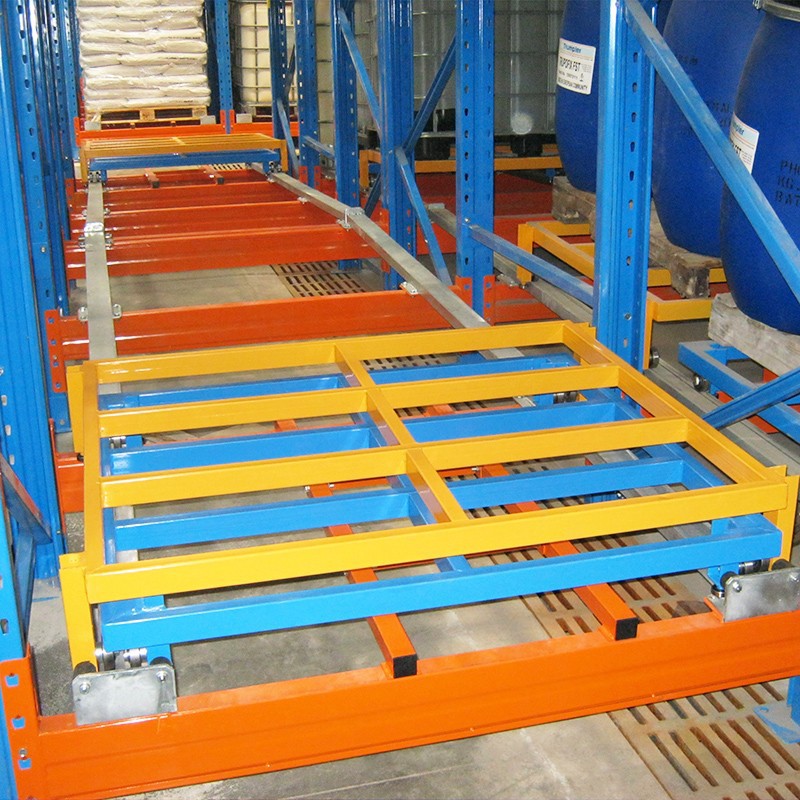
As a responsible supplier, we ensure that all our Push Back Pallet Rack Systems, including the Push Back Racking System, comply with these standards. This not only helps to ensure the safety and reliability of our products but also gives our clients peace of mind knowing that their racking systems are built to meet the highest industry standards.
Conclusion
Seismic activity can have a significant impact on Push Back Pallet Rack Systems, affecting their structural integrity, safety, and functionality. As a supplier, we are committed to providing our clients with high - quality, seismic - resistant racking solutions. By conducting thorough seismic risk assessments, using appropriate design and installation techniques, and complying with industry standards, we can help our clients minimize the impact of seismic activity on their storage facilities.
If you are interested in learning more about our Push Back Pallet Rack Systems and how we can help you design a seismic - resistant solution for your warehouse, we encourage you to contact us. Our team of experts is ready to assist you in making the right choice for your storage needs.
References
- Rack Manufacturers Institute (RMI). Seismic Design Guidelines for Industrial Steel Storage Racks.
- International Building Code (IBC). Provisions for Seismic Design of Structures.
- Earthquake Engineering Research Institute (EERI). Publications on Seismic Design of Industrial Structures.


