

The Radio Shuttle Racking System is a revolutionary storage solution that has transformed the way warehouses operate. As a supplier of this advanced system, I've witnessed firsthand its numerous benefits, including increased storage density, improved inventory management, and enhanced operational efficiency. One crucial aspect that often comes under scrutiny is its impact on warehouse floor load - bearing capacity. In this blog, we'll delve into this topic to understand how the Radio Shuttle Racking System interacts with warehouse floors.
Understanding Warehouse Floor Load - Bearing Capacity
Before we discuss the impact of the Radio Shuttle Racking System, it's essential to understand what warehouse floor load - bearing capacity means. Floor load - bearing capacity refers to the maximum amount of weight that a warehouse floor can safely support per unit area. This capacity is determined by various factors, such as the type of construction materials used, the design of the floor structure, and the intended use of the warehouse.
Warehouse floors are typically designed to withstand a certain level of static and dynamic loads. Static loads include the weight of the racking system itself, the stored goods, and any permanent fixtures. Dynamic loads, on the other hand, are caused by moving equipment, such as forklifts and shuttles. Exceeding the floor's load - bearing capacity can lead to structural damage, including cracks, uneven settlement, and even collapse in extreme cases.
How the Radio Shuttle Racking System Affects Floor Load - Bearing Capacity
Distribution of Load
One of the significant advantages of the Radio Shuttle Racking System is its ability to distribute the load more evenly across the warehouse floor compared to traditional racking systems. In a traditional pallet racking system, the weight of the pallets is concentrated at the base of the uprights. This can create high - stress points on the floor, increasing the risk of damage.
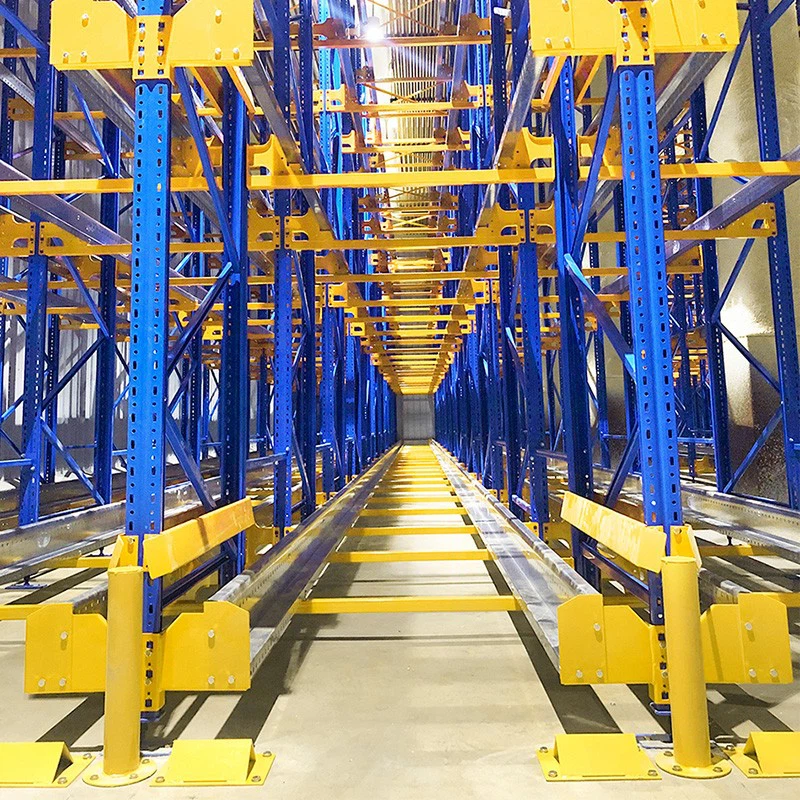
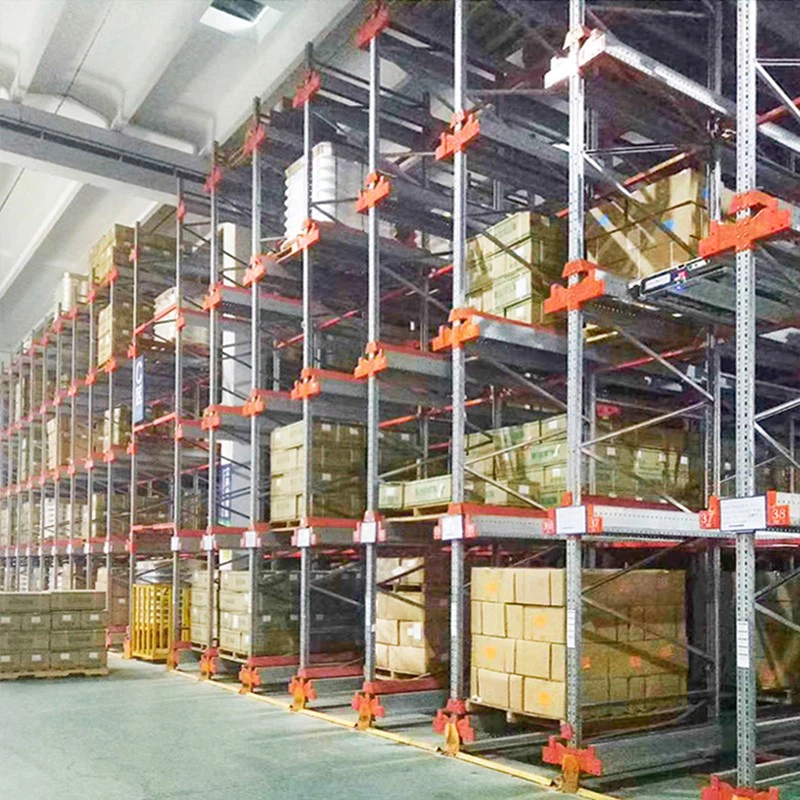
In contrast, the Radio Shuttle Racking System uses a shuttle device that moves along the rails inside the racking channels. The shuttle distributes the weight of the pallets more evenly along the length of the racking, reducing the pressure on any single point of the floor. This even distribution of load helps to minimize the risk of overloading the floor and extends the lifespan of the warehouse floor.
High - Density Storage
The Radio Shuttle Racking System enables high - density storage, which means that more goods can be stored in a given area. While this may seem like it would increase the overall load on the floor, the system's design actually helps to manage the load more effectively. By stacking pallets deeper into the racking, the system reduces the need for wide aisles, which are typically used in traditional racking systems.
With fewer aisles, the floor area that is used for storage is maximized. This allows for a more efficient use of the available floor space and can actually result in a lower overall load per unit area compared to a traditional racking system with the same storage capacity. For example, a 1200kg Unit Load Storage Shuttle Pallet Racking System can store a large number of pallets in a relatively small area, while keeping the load on the floor within acceptable limits.
Operational Efficiency
The Radio Shuttle Racking System improves operational efficiency by reducing the need for forklifts to enter the storage aisles. Forklifts are heavy equipment that can exert significant dynamic loads on the warehouse floor. Every time a forklift moves, it creates vibrations and impacts that can cause wear and tear on the floor surface.
By using a shuttle device to transport pallets within the racking, the Radio Shuttle Racking System minimizes the use of forklifts in the storage area. This reduces the dynamic loads on the floor, which is especially beneficial for warehouses with older or less robust floors. The reduced forklift traffic also means less potential for accidental damage to the floor, such as scratches and dents.
Factors to Consider When Assessing the Impact
Rack Configuration
The configuration of the Radio Shuttle Racking System can have a significant impact on the floor load - bearing capacity. Factors such as the height of the racking, the number of levels, and the depth of the storage channels all affect the distribution of the load. For example, taller racking systems may require a more robust floor structure to support the additional weight.
When designing a Radio Shuttle Racking System, it's crucial to work with a professional engineer who can assess the specific requirements of the warehouse and recommend the appropriate rack configuration. This ensures that the system is designed to operate safely within the limits of the warehouse floor's load - bearing capacity.
Load Characteristics
The type and weight of the stored goods also play a role in determining the impact on the floor. Different products have different densities and weights, which can affect the overall load on the racking and the floor. For example, storing heavy items such as steel coils or machinery will require a higher floor load - bearing capacity compared to storing lighter items such as cardboard boxes.
It's important to accurately calculate the weight of the stored goods and ensure that the Radio Shuttle Racking System is designed to handle the specific load characteristics. This may involve adjusting the rack design, such as using stronger uprights or beams, to ensure that the system can safely support the weight of the goods without overloading the floor.
Case Studies
Let's look at a few case studies to illustrate the impact of the Radio Shuttle Racking System on warehouse floor load - bearing capacity.
Case Study 1: A Food Distribution Warehouse
A food distribution warehouse was facing challenges with its traditional pallet racking system. The warehouse had limited floor space, and the high traffic of forklifts was causing significant wear and tear on the floor. The company decided to install a Radio Shuttle Racking System to improve storage density and operational efficiency.
After the installation, the company noticed a significant reduction in the dynamic loads on the floor. The shuttle device evenly distributed the weight of the pallets, and the reduced forklift traffic minimized the impact on the floor surface. The floor showed less signs of damage, and the company was able to store more goods in the same area without overloading the floor.
Case Study 2: An E - commerce Fulfillment Center
An e - commerce fulfillment center needed to increase its storage capacity to meet the growing demand for its products. The center had an older warehouse floor with a relatively low load - bearing capacity. The company chose a FIFO and FILO High Density Storage Shuttle Racking System to maximize storage space while keeping the load on the floor within acceptable limits.
The system's design allowed for high - density storage without creating excessive stress on the floor. The even distribution of load and the reduced forklift traffic helped to preserve the integrity of the floor. As a result, the center was able to expand its storage capacity without the need for costly floor reinforcement.
Conclusion
The Radio Shuttle Racking System has a positive impact on warehouse floor load - bearing capacity. Its ability to distribute the load evenly, enable high - density storage, and reduce dynamic loads makes it a more floor - friendly option compared to traditional racking systems. However, it's important to carefully consider factors such as rack configuration and load characteristics when designing and installing the system to ensure that it operates safely within the limits of the warehouse floor's capacity.
If you're considering upgrading your warehouse storage system or are looking for a solution that can optimize your floor space while protecting your floor, we're here to help. Our team of experts can assess your specific requirements and recommend the most suitable Radio Shuttle Racking System for your warehouse. Contact us today to start a discussion about how we can improve your warehouse operations.
References
- White, J. A., & Roodbergen, K. J. (2017). Warehouse design and control: Framework and literature review. European Journal of Operational Research, 257(2), 321 - 339.
- Gu, J., Goetschalckx, M., & McGinnis, L. F. (2007). Research on warehouse operation: A comprehensive review. European Journal of Operational Research, 177(1), 1 - 21.
- Boysen, N., Fliedner, M., & Scholl, A. (2009). Routing of storage/retrieval machines in unit - load warehouses: Classification, models, and algorithms. European Journal of Operational Research, 198(3), 679 - 692.


