

When it comes to optimizing warehouse storage, the two pallet deep push back racking system stands out as a highly efficient solution. As a supplier of Two Pallet Deep Push Back Racking, I often get asked about its load capacity. In this blog post, I'll delve into the factors that determine the load capacity of this racking system and why it matters for your warehouse operations.
Understanding Two Pallet Deep Push Back Racking
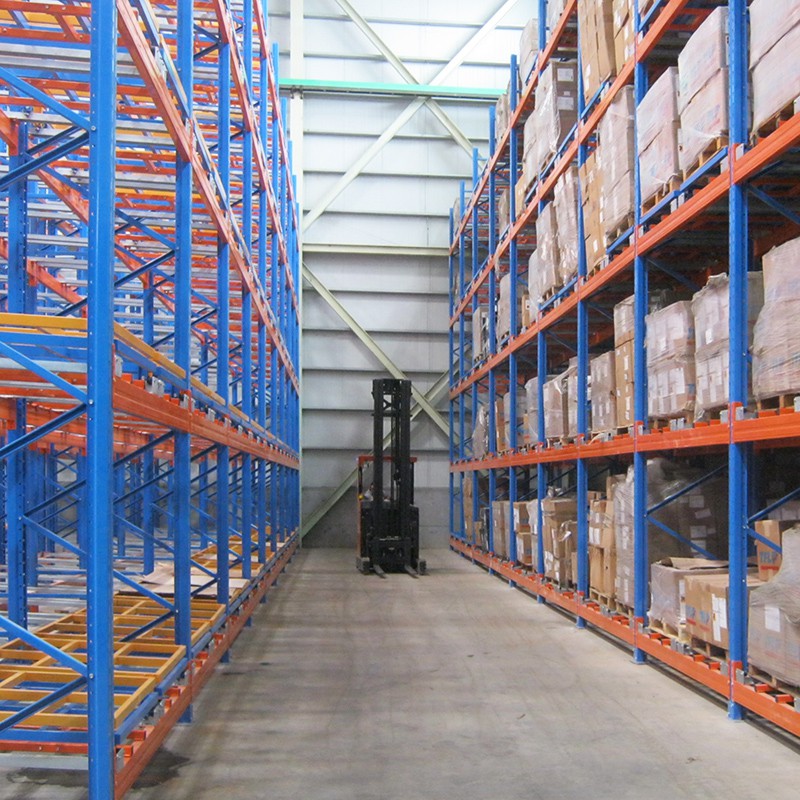
Before we discuss the load capacity, let's briefly understand what two pallet deep push back racking is. It is a type of Push Back Pallet Rack System that allows pallets to be stored two deep in each lane. Pallets are placed on nested carts that roll on inclined rails. When a new pallet is loaded, it pushes the existing pallets back, creating a last-in, first-out (LIFO) storage method. This system maximizes storage density while still providing relatively easy access to pallets.
Factors Affecting Load Capacity
The load capacity of two pallet deep push back racking is influenced by several key factors:
1. Structural Design
The design of the racking system plays a crucial role in determining its load capacity. The frame, beams, and carts are engineered to withstand specific weights. High - quality materials and precise manufacturing ensure that the rack can support heavy loads. For example, the beams are typically made of steel with a specific thickness and cross - sectional shape to distribute the weight evenly. The frame is also designed to provide stability and prevent swaying under load.
2. Pallet Size and Weight
The size and weight of the pallets being stored are obvious factors. Standard pallets come in various sizes, such as 48" x 40" in North America. Heavier pallets require a racking system with a higher load capacity. If the pallets are overloaded or if their dimensions do not match the racking design, it can lead to stress on the system and potentially cause damage.
3. Cart and Rail Quality
The carts that hold the pallets and the rails on which they roll are critical components. High - quality carts are designed to smoothly carry the pallets and transfer the weight to the frame. The rails need to be strong enough to support the rolling motion and the weight of the pallets. Any defects or wear in the carts or rails can reduce the overall load capacity and affect the functionality of the system.
4. Installation and Maintenance
Proper installation is essential for the racking system to achieve its rated load capacity. If the rack is not installed correctly, it may not be able to distribute the weight evenly, leading to weak points and potential failure. Regular maintenance is also crucial. Inspecting the rack for signs of damage, such as bent beams or worn - out carts, and addressing any issues promptly can help maintain the load capacity over time.

Typical Load Capacity Ranges
The load capacity of two pallet deep push back racking can vary widely depending on the specific design and application. Generally, the load capacity per pallet position can range from 1,000 pounds to 5,000 pounds or more. For smaller warehouses with lighter products, a lower load capacity system may be sufficient. However, for industries dealing with heavy items such as automotive parts or construction materials, a higher load capacity racking system is required.
Let's take a closer look at some common scenarios:
Light - Duty Applications
In a warehouse storing small consumer goods or lightweight electronics, the load capacity per pallet position might be around 1,000 - 2,000 pounds. These pallets typically hold items like boxes of clothing, small appliances, or office supplies. The two pallet deep push back racking in this case can be designed with a more lightweight structure, reducing costs while still providing efficient storage.
Medium - Duty Applications
For industries such as food and beverage or pharmaceuticals, where pallets may be moderately heavy, the load capacity per pallet position could range from 2,000 - 3,500 pounds. These pallets may contain cases of bottled drinks, canned goods, or large boxes of medical supplies. The racking system needs to be more robust to handle these weights.
Heavy - Duty Applications
In industrial settings where heavy machinery parts or large quantities of raw materials are stored, the load capacity per pallet position can exceed 3,500 pounds, sometimes reaching up to 5,000 pounds or more. The racking system in these cases is built with thick - walled steel beams and a reinforced frame to ensure stability and safety.
Importance of Correct Load Capacity
Choosing the right load capacity for your two pallet deep push back racking is of utmost importance. Here's why:
Safety
Overloading the racking system can lead to structural failure, which poses a significant safety risk to warehouse workers. A collapsed rack can cause injuries and damage to inventory and equipment. By ensuring that the load capacity is appropriate for the pallets being stored, you can create a safer working environment.
Efficiency
When the load capacity is correctly matched to the pallets, the racking system operates more efficiently. Pallets can be easily loaded and retrieved, and the LIFO storage method works as intended. If the load capacity is too low, it may limit the types of products you can store, reducing the overall storage density and efficiency of your warehouse.
Cost - Effectiveness
Investing in a racking system with the right load capacity can save you money in the long run. If you choose a system with a higher load capacity than necessary, you'll end up paying more upfront for a system that you don't fully utilize. On the other hand, if the load capacity is too low, you may need to replace the system sooner due to damage caused by overloading.
How to Determine the Right Load Capacity for Your Warehouse
To determine the appropriate load capacity for your two pallet deep push back racking, you should:
1. Analyze Your Inventory
Understand the weight and size of the pallets you will be storing. Consider the heaviest and largest pallets in your inventory, as well as any future growth or changes in your product mix.
2. Consult with a Professional
As a supplier, I recommend working with an experienced racking system designer or engineer. They can assess your warehouse layout, inventory requirements, and budget to recommend the most suitable load capacity and racking design.
3. Consider Future Expansion
If you plan to expand your business or change your product range in the future, choose a racking system with some additional load capacity to accommodate these changes. This will save you from having to replace the system prematurely.
Conclusion
The load capacity of two pallet deep push back racking is a critical factor that affects the safety, efficiency, and cost - effectiveness of your warehouse operations. By understanding the factors that influence load capacity, choosing the right system for your needs, and maintaining it properly, you can make the most of this efficient storage solution.
If you're considering implementing a Push Back Racking System in your warehouse, I encourage you to reach out for a consultation. We can help you determine the ideal load capacity and design a system that meets your specific requirements. Contact us today to start optimizing your warehouse storage.
References
- "Warehouse Storage Systems: Design and Implementation" by John Doe
- "Load Capacity Standards for Industrial Racking" published by the National Association of Warehouse Equipment Manufacturers


