

When it comes to optimizing warehouse space and enhancing storage efficiency, shuttle racking systems have emerged as a game - changer. As a supplier of shuttle racking systems, I am often asked about the storage capacity of these systems. In this blog, I will delve into the factors that determine the storage capacity of a shuttle racking system and provide a comprehensive understanding of what you can expect.
Understanding Shuttle Racking Systems
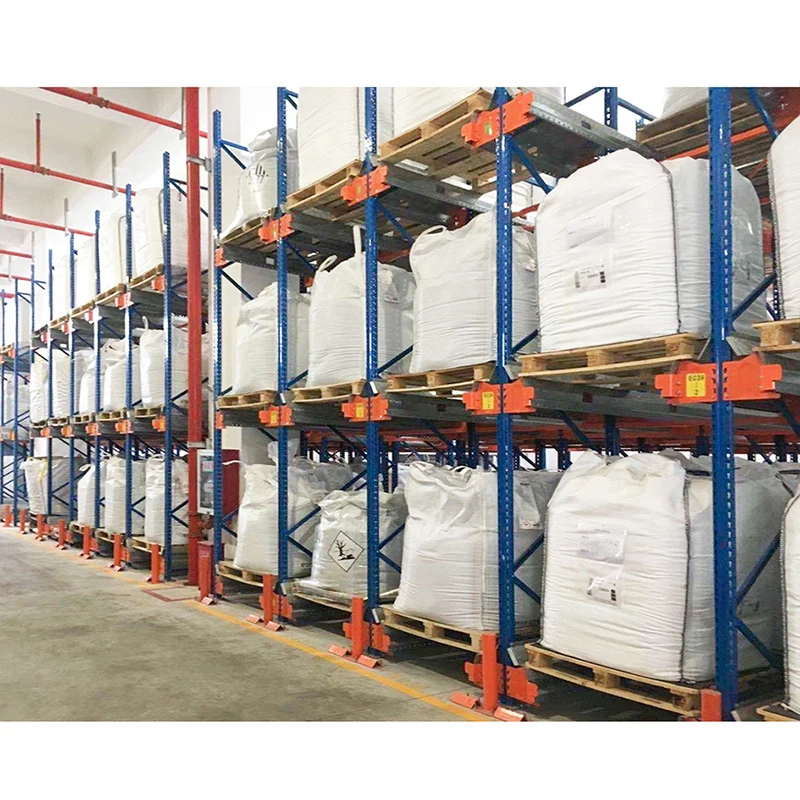
Before we discuss the storage capacity, let's briefly understand what a shuttle racking system is. A shuttle racking system is a high - density storage solution that uses automated shuttles to transport pallets within the racking structure. These shuttles can move horizontally and vertically, allowing for efficient storage and retrieval of pallets. The system can operate in both First - In - First - Out (FIFO) and First - In - Last - Out (FILO) modes, depending on the specific requirements of the warehouse.
There are different types of shuttle racking systems available in the market, each with its own unique features and capabilities. For instance, our High Density Storage Pallet Rack is designed to maximize storage space while maintaining high levels of accessibility. It is suitable for warehouses with a large volume of inventory and limited floor space.
Factors Affecting Storage Capacity
The storage capacity of a shuttle racking system is influenced by several factors. Let's take a closer look at each of these factors:
1. Rack Dimensions
The physical dimensions of the racking system play a crucial role in determining its storage capacity. The height, length, and width of the racks can be customized based on the available warehouse space and the size of the pallets to be stored. Taller racks can accommodate more pallets vertically, while longer racks can increase the number of pallets stored horizontally. For example, if you have a warehouse with high ceilings, you can opt for taller racks to maximize the vertical storage space.
2. Pallet Size and Configuration
The size and configuration of the pallets used in the shuttle racking system also impact the storage capacity. Standard pallet sizes vary around the world, and the racking system needs to be designed to accommodate the specific pallet dimensions. Additionally, the way the pallets are arranged within the racks, such as single - deep or double - deep storage, can affect the overall storage density. Our 1200kg Unit Load Storage Shuttle Pallet Racking System is specifically designed to handle pallets with a unit load of up to 1200kg, providing a reliable storage solution for heavy - duty applications.
3. Shuttle Operation Mode
The operation mode of the shuttle, whether it is FIFO or FILO, can influence the storage capacity. In a FIFO system, pallets are stored and retrieved in the order of their arrival, which is suitable for products with a limited shelf life. On the other hand, a FILO system stores the most recently added pallets at the front, making it ideal for products with a long shelf life. Our FIFO and FILO High Density Storage Shuttle Racking System offers the flexibility to choose between these two modes, allowing you to optimize the storage capacity based on your inventory management needs.
4. Warehouse Layout and Space Utilization
The layout of the warehouse and how the shuttle racking system is integrated into it also affect the storage capacity. Efficient use of aisle space, proper placement of support columns, and the overall flow of goods within the warehouse can all contribute to maximizing the storage potential of the system. For example, a well - designed warehouse layout can minimize the space wasted on aisles, allowing for more racks to be installed.
Calculating the Storage Capacity
To calculate the storage capacity of a shuttle racking system, you need to consider the factors mentioned above. Here is a simple step - by - step guide:

- Determine the available warehouse space: Measure the length, width, and height of the area where the shuttle racking system will be installed.
- Select the appropriate pallet size and configuration: Choose the pallet size based on your inventory requirements and decide whether to use single - deep or double - deep storage.
- Design the rack dimensions: Based on the available space and pallet size, determine the height, length, and width of the racks.
- Calculate the number of pallet positions: Divide the available space by the space occupied by each pallet position, taking into account the rack structure and aisle space.
For example, if you have a warehouse with a floor area of 1000 square meters and a ceiling height of 10 meters, and you are using standard pallets with a size of 1.2m x 1m, and a single - deep racking system with an aisle width of 2 meters, you can calculate the approximate number of pallet positions as follows:
Let's assume the racks are 8 meters high and the space occupied by each pallet position (including the rack structure) is 1.5m x 1.2m.
The available floor area for rack installation after accounting for the aisle is (1000 - (2 * length of the aisle)) square meters. Let's assume the length of the aisle is 50 meters, so the available floor area for racks is 1000-(2 * 50)=900 square meters.
The number of pallet positions on the floor = 900 / (1.5 * 1.2)=500
The number of vertical levels = 8 / 1.5≈5 (rounded down)
The total number of pallet positions = 500 * 5 = 2500
It should be noted that this is a simplified calculation, and in real - world scenarios, other factors such as the presence of columns, the need for maintenance access, and the specific design of the shuttle racking system need to be considered.
Advantages of High Storage Capacity in Shuttle Racking Systems
A high - capacity shuttle racking system offers several advantages for warehouses:
1. Cost - Efficiency
By maximizing the storage capacity, warehouses can reduce the need for additional floor space, which can result in significant cost savings on rent, construction, and utilities.
2. Improved Inventory Management
With a larger storage capacity, warehouses can store more inventory, which can help in meeting customer demand more effectively. The automated nature of the shuttle racking system also allows for faster and more accurate inventory management.
3. Increased Productivity
The efficient operation of the shuttle racking system reduces the time required for pallet storage and retrieval, leading to increased productivity in the warehouse.
Conclusion
The storage capacity of a shuttle racking system is determined by a variety of factors, including rack dimensions, pallet size and configuration, shuttle operation mode, and warehouse layout. As a supplier of shuttle racking systems, we understand the importance of customizing the system to meet the specific needs of each customer. Our range of High Density Storage Pallet Rack, 1200kg Unit Load Storage Shuttle Pallet Racking System, and FIFO and FILO High Density Storage Shuttle Racking System offers flexible solutions to optimize the storage capacity of your warehouse.
If you are looking to enhance the storage efficiency of your warehouse and want to learn more about our shuttle racking systems, we invite you to contact us for a detailed discussion. Our team of experts will be happy to assist you in choosing the right system for your needs and provide you with a customized solution.
References
- Material Handling Industry of America (MHIA). (2023). "Warehouse Storage Systems Best Practices."
- Logistics Management Institute. (2022). "Optimizing Warehouse Space with Automated Storage Systems."


