

Hey there! I'm a supplier of Three Pallet Deep Push Back Pallet Racks, and today I want to have an open and honest chat about the disadvantages of these racks. Yeah, I know it might seem a bit counter - intuitive for a supplier to talk about the downsides, but I believe in being transparent with you.
Limited Selectivity
One of the major drawbacks of Three Pallet Deep Push Back Pallet Racks is the limited selectivity. With these racks, goods are stored in a last - in, first - out (LIFO) system. Picture this: you've got three pallets deep in each lane. When you need to access a pallet that's deeper in the lane, you have to move the pallets that are in front of it first.
This can be a real pain in the neck, especially if you have a high - turnover inventory where you need to access different pallets frequently. For example, in a grocery distribution center, if you have perishable goods, the LIFO system might not be the best fit. You want to be able to get to the oldest stock first to avoid spoilage, but with these racks, it's not that straightforward. In contrast, other types of racking systems like selective pallet racks offer 100% selectivity, meaning you can access any pallet at any time without having to move others.
High Initial Investment
Another disadvantage is the high initial investment required for Three Pallet Deep Push Back Pallet Racks. These racks are more complex in design compared to basic pallet racks. They have a system of nested carts and rails that allow the pallets to be pushed back, and this complexity comes at a cost.
The materials used for the carts, rails, and the overall structure need to be of high quality to ensure smooth operation and durability. Plus, the installation process is more involved. You need to make sure the racks are level and properly aligned to prevent any jams or malfunctions. All these factors contribute to a higher upfront cost. If you're a small business with a tight budget, this might be a significant barrier. You might have to think twice before investing in these racks when there are more affordable options available.
Maintenance Requirements
Three Pallet Deep Push Back Pallet Racks also come with relatively high maintenance requirements. The moving parts, such as the carts and the rails, are constantly in use. Over time, these parts can wear out, and you might experience issues like misaligned carts or damaged rails.
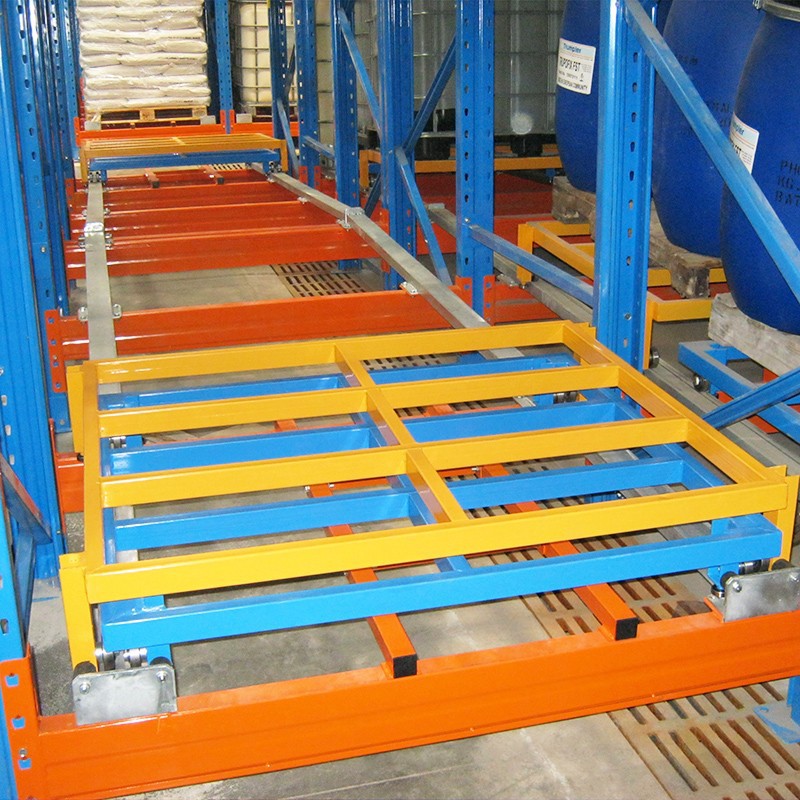

Regular maintenance is essential to keep the system running smoothly. You need to lubricate the moving parts, check for any signs of wear and tear, and make sure the pallets are being loaded and unloaded correctly. If you neglect maintenance, it can lead to breakdowns, which can disrupt your operations. And let's not forget about the cost of maintenance. You might need to hire specialized technicians to carry out the maintenance work, which adds to the overall cost of ownership.
Limited Pallet Size and Weight Compatibility
These racks have limitations when it comes to pallet size and weight. The design of the Three Pallet Deep Push Back Pallet Racks is optimized for a certain range of pallet sizes. If you have non - standard pallets, it can be a challenge to use them in these racks.
For example, if you have oversized pallets, they might not fit properly on the carts, or they could cause jams in the system. Similarly, there's a maximum weight capacity for each cart and the overall rack structure. If you try to load pallets that exceed this weight limit, it can put a lot of stress on the system and increase the risk of damage. So, if your business deals with a variety of pallet sizes and weights, you might find these racks to be too restrictive.
Difficulty in Installation and Reconfiguration
Installing Three Pallet Deep Push Back Pallet Racks is not a walk in the park. It requires a high level of expertise and precision. The racks need to be installed in a way that ensures the proper functioning of the push - back mechanism. If the installation is not done correctly, it can lead to problems like uneven movement of the pallets or even complete system failure.
Moreover, if you need to reconfigure your storage layout in the future, it can be quite difficult. Unlike some other racking systems that are more modular and easier to adjust, these racks are more complex to modify. You might have to disassemble a large part of the system and then reassemble it, which is time - consuming and costly.
Comparison with Other Racking Systems
When compared to other types of racking systems, Three Pallet Deep Push Back Pallet Racks have some clear disadvantages. For instance, compared to Push Back Racking System, the four - pallet deep version, Four Pallet Deep Push Back Racks Pallets, offers even more storage density. However, it also exacerbates the issues related to selectivity and maintenance.
On the other hand, selective pallet racks offer better selectivity but less storage density. So, depending on your specific needs, you need to carefully weigh the pros and cons of each system. If you prioritize selectivity and have a relatively small inventory, selective racks might be a better choice. But if you have a large inventory and can tolerate the limitations of the LIFO system, then Three Pallet Deep Push Back Pallet Racks could be considered.
Conclusion
Despite the disadvantages I've mentioned, Three Pallet Deep Push Back Pallet Racks still have their place in the market. They offer a good balance between storage density and cost in some situations. If you have a large inventory of similar products and don't need 100% selectivity, these racks can be a viable option.
However, it's important to be aware of the drawbacks before making a decision. I understand that choosing the right racking system for your business is a big decision, and I'm here to help you make an informed choice. If you're considering Three Pallet Deep Push Back Pallet Racks, feel free to reach out. We can have a detailed discussion about your specific requirements and see if these racks are the right fit for you. Let's work together to find the best storage solution for your business.
References
- Warehouse Storage Racking: A Comprehensive Guide. Industry Insights Publication.
- Best Practices for Pallet Racking Maintenance. Logistics Management Journal.


