

When it comes to optimizing warehouse space and improving storage efficiency, a Push Back Racking System stands out as an excellent solution. As a seasoned supplier of Push Back Racking Systems, I often receive questions from clients about the height limit of this racking system. In this blog post, I will delve into the factors that determine the height limit of a Push Back Racking System, the implications of different height configurations, and how to make the best choice for your warehouse.
Understanding the Push Back Racking System
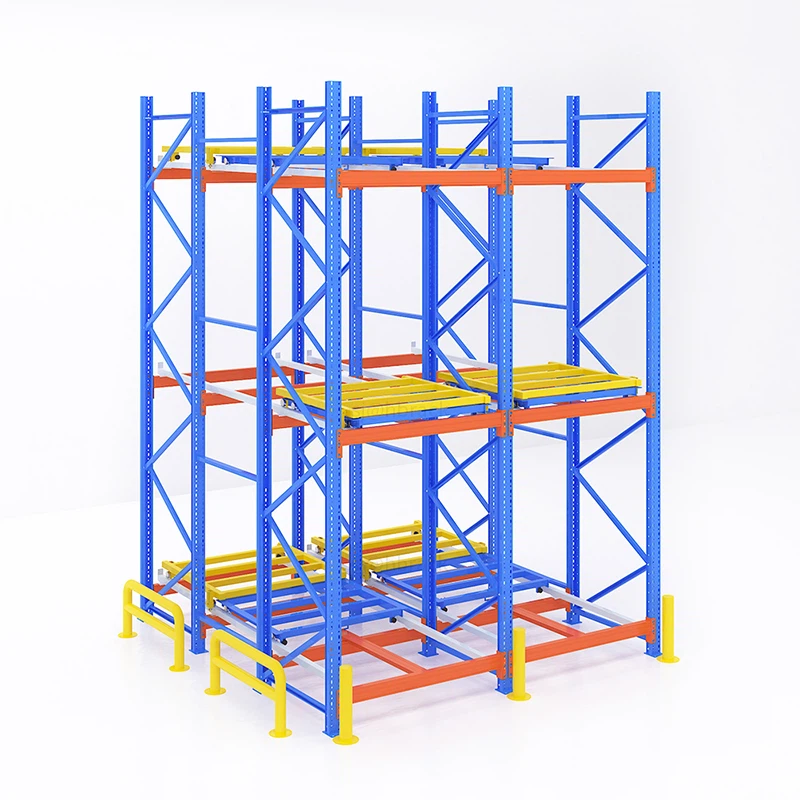
Before we discuss the height limit, let's briefly review what a Push Back Racking System is. A Push Back Racking System is a high - density storage solution that allows pallets to be stored multiple deep. Pallets are loaded onto nested carts that are mounted on inclined rails. When a new pallet is loaded, it pushes the existing pallets back, creating a last - in, first - out (LIFO) storage method. This system is ideal for warehouses with large quantities of the same SKU and limited floor space.
You can learn more about our Push Back Racking System on our website.
Factors Affecting the Height Limit
The height limit of a Push Back Racking System is not a one - size - fits - all number. It is influenced by several key factors:
Structural Integrity
The structural integrity of the racking system is of utmost importance. As the height of the racking increases, the load on the upright frames and other components also increases. The materials used in the construction of the racking, such as the gauge of the steel, play a crucial role. Higher - grade steel can withstand greater loads, allowing for taller racking systems. Additionally, the design of the upright frames, including their thickness and shape, affects how well they can support the weight of the pallets at different heights.
Warehouse Ceiling Height
The available ceiling height in your warehouse is an obvious limiting factor. Even if the racking system can technically be built taller, it cannot exceed the height of the warehouse ceiling. It's important to measure the clear height in the warehouse, taking into account any obstructions such as sprinkler systems, ventilation ducts, or lighting fixtures.
Forklift Reach
The reach of your forklifts is another critical factor. Forklifts need to be able to access the pallets at the top of the racking system. Different forklift models have different maximum lift heights. If the racking is built too tall for your forklifts to reach, it will be impossible to load and unload pallets efficiently.

Load Capacity
The weight of the pallets and their contents also impacts the height limit. Heavier loads require more robust racking components and may limit the height to ensure the safety of the system. Each level of the racking system must be able to support the weight of the pallets above it, and as the height increases, the cumulative load on the lower levels becomes significant.
Typical Height Ranges
In general, Push Back Racking Systems can range from a few meters to over 10 meters in height. For smaller warehouses or those with lighter loads, a height of 3 - 6 meters may be sufficient. These lower - height systems are often easier to install and maintain, and they may be more suitable for forklifts with limited reach.
For larger warehouses with high - volume storage needs and appropriate forklift equipment, heights of 8 - 10 meters or more are possible. However, these taller systems require careful engineering and design to ensure their stability and safety.
We offer Three Pallet Deep Push Back Pallet Racks and Four Pallet Deep Push Back Racks Pallets in various height configurations to meet different customer requirements.
Implications of Different Height Configurations
Space Utilization
Taller racking systems can significantly increase the storage capacity of a warehouse. By utilizing the vertical space, you can store more pallets in the same floor area. This is especially beneficial for warehouses with high land costs or limited available space. However, it's important to balance the increased storage capacity with the need for proper aisle space and access to the pallets.
Installation and Maintenance
Installing a taller Push Back Racking System is generally more complex and time - consuming than a shorter one. It may require specialized equipment and trained installers. Maintenance also becomes more challenging as accessing the upper levels of the racking for inspections and repairs can be difficult.
Safety
Safety is a major concern when it comes to taller racking systems. The risk of collapse or instability increases with height, especially if the system is not properly designed or installed. Adequate safety measures, such as bracing, load - limiting devices, and proper signage, must be in place to ensure the safety of warehouse personnel and the protection of the stored goods.
Choosing the Right Height for Your Warehouse
When deciding on the height of your Push Back Racking System, it's essential to conduct a thorough analysis of your warehouse requirements. Consider the following steps:
Assess Your Storage Needs
Determine the quantity and size of the pallets you need to store, as well as the frequency of access. This will help you understand how much storage space you actually require and whether a taller or shorter racking system is more appropriate.
Evaluate Your Warehouse Infrastructure
Measure the ceiling height, check for any obstructions, and assess the floor condition. The floor must be able to support the weight of the racking and the stored pallets. Also, consider the layout of the warehouse and the available aisle space for forklift maneuvering.
Consider Your Forklift Fleet
Review the capabilities of your forklifts, including their lift height, load capacity, and maneuverability. If necessary, you may need to upgrade your forklift equipment to accommodate a taller racking system.
Consult with an Expert
As a supplier of Push Back Racking Systems, we have the expertise and experience to help you design the optimal racking solution for your warehouse. Our team of engineers can conduct a site survey, analyze your requirements, and provide recommendations on the appropriate height and configuration of the racking system.
Conclusion
The height limit of a Push Back Racking System is determined by a combination of factors, including structural integrity, warehouse ceiling height, forklift reach, and load capacity. By carefully considering these factors and conducting a thorough analysis of your warehouse needs, you can choose the right height for your racking system to maximize storage efficiency and ensure safety.
If you are interested in learning more about our Push Back Racking Systems or need assistance in designing a custom - made solution for your warehouse, we encourage you to contact us. Our team is ready to discuss your requirements and provide you with a detailed proposal. Let's work together to optimize your warehouse storage and improve your operational efficiency.
References
- "Warehouse Rack Design and Installation Standards", Industrial Rack Manufacturers Institute (IRMI)
- "Material Handling Equipment: Selection and Application", John A. White, Wiley Publishing


