

As a supplier of Three Pallet Deep Push Back Pallet Racks, I often get asked about the load capacity of these systems. Understanding the load capacity is crucial for businesses looking to optimize their warehouse storage solutions. In this blog post, I'll delve into the factors that determine the load capacity of three pallet deep push back pallet racks and provide some insights to help you make informed decisions.
Understanding Push Back Pallet Racks
Before we discuss the load capacity, let's briefly understand what push back pallet racks are. Push back pallet racks are a high-density storage system that allows pallets to be stored multiple deep. They operate on a first-in, last-out (FILO) principle, where pallets are loaded from the front of the rack and pushed back onto nested carts or rollers. When a new pallet is loaded, it pushes the existing pallets back, creating a continuous flow of storage.
The Push Back Racking System offers several advantages, including increased storage density, improved selectivity, and efficient use of warehouse space. It is suitable for warehouses with a large volume of inventory and a need for quick access to pallets.
Factors Affecting Load Capacity
The load capacity of three pallet deep push back pallet racks is influenced by several factors, including:
1. Rack Structure and Design
The design and construction of the rack play a significant role in determining its load capacity. High-quality racks are typically made from heavy-duty steel and are engineered to withstand the weight of multiple pallets. The rack's frame, beams, and supports are designed to distribute the load evenly and prevent overloading.
When selecting a push back pallet rack system, it's essential to choose a design that is suitable for your specific application. Consider factors such as the size and weight of your pallets, the height of your warehouse, and the frequency of pallet handling.
2. Pallet Size and Weight
The size and weight of the pallets being stored also affect the load capacity of the rack. Standard pallets come in various sizes, such as 48" x 40" or 42" x 42". The weight of the pallets can vary depending on the type of goods being stored, ranging from a few hundred pounds to several thousand pounds.
It's important to ensure that the pallets you use are compatible with the push back rack system. Overloading the pallets can cause damage to the rack and pose a safety hazard. Make sure to follow the manufacturer's guidelines regarding pallet size and weight limits.
3. Cart or Roller System
The cart or roller system used in the push back rack is another critical factor in determining load capacity. The carts or rollers are responsible for supporting the pallets and allowing them to move smoothly within the rack.

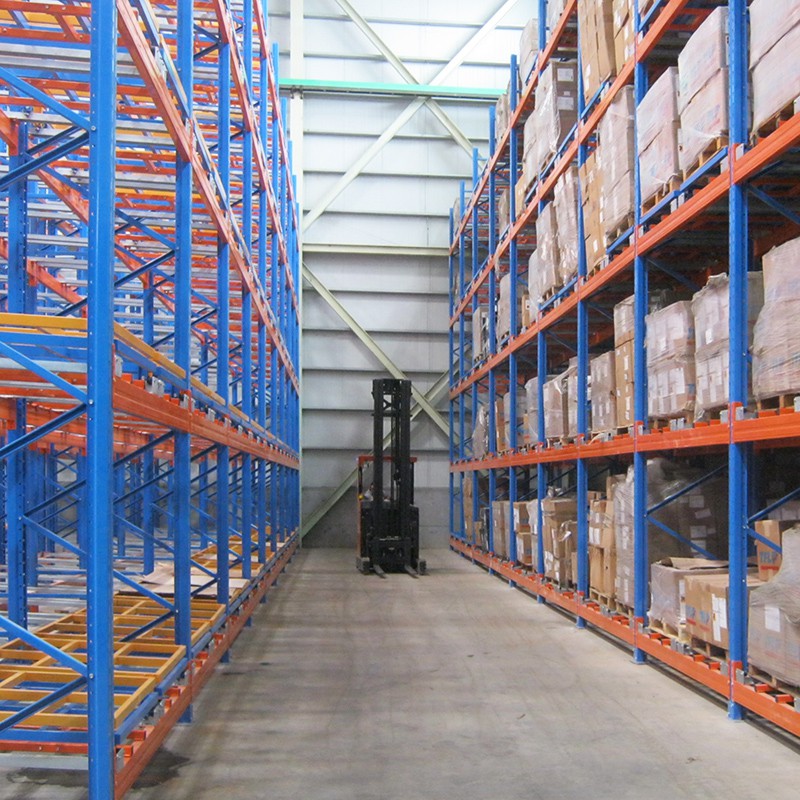
High-quality carts or rollers are designed to handle the weight of multiple pallets and provide reliable operation. They are typically made from durable materials, such as steel or plastic, and are engineered to withstand the rigors of daily use.
4. Warehouse Conditions
The conditions in your warehouse can also impact the load capacity of the push back pallet racks. Factors such as temperature, humidity, and floor conditions can affect the performance and durability of the rack.
For example, if your warehouse is located in a humid environment, the steel components of the rack may be more prone to corrosion. In such cases, it's important to choose a rack system that is coated or treated to resist corrosion.
Determining the Load Capacity
To determine the load capacity of three pallet deep push back pallet racks, it's best to consult with a professional rack supplier or engineer. They can assess your specific requirements and recommend a rack system that is suitable for your application.
In general, the load capacity of a push back rack system is specified in terms of the maximum weight per pallet position. This weight includes the weight of the pallet and its contents. For example, a rack system with a load capacity of 3,000 pounds per pallet position can safely support pallets weighing up to 3,000 pounds each.
It's important to note that the load capacity may vary depending on the factors mentioned above. Therefore, it's crucial to provide accurate information about your pallets, warehouse conditions, and handling requirements to ensure that the rack system is designed to meet your needs.
Comparing with Two Pallet Deep Push Back Racking
Another option to consider is the Two Pallet Deep Push Back Racking. While three pallet deep push back racks offer higher storage density, two pallet deep racks provide better selectivity.
Two pallet deep push back racks allow for easier access to individual pallets, as there are fewer pallets stacked behind each other. This can be beneficial in warehouses where quick access to specific pallets is required.
When deciding between two pallet deep and three pallet deep push back racks, it's important to consider your specific storage requirements, such as the volume of inventory, the frequency of pallet handling, and the need for selectivity.
Importance of Load Capacity Assessment
Properly assessing the load capacity of your push back pallet racks is essential for ensuring the safety and efficiency of your warehouse operations. Overloading the racks can lead to structural damage, pallet collapse, and even accidents.
Regularly inspecting the racks for signs of damage or wear and tear is also important. If you notice any issues, such as bent beams or loose connections, it's crucial to address them immediately to prevent further damage.
Conclusion
The load capacity of three pallet deep push back pallet racks is determined by several factors, including the rack structure, pallet size and weight, cart or roller system, and warehouse conditions. By understanding these factors and working with a professional rack supplier, you can select a push back rack system that is suitable for your specific application and provides reliable performance.
If you're considering implementing a Push Back Pallet Rack System in your warehouse, I encourage you to contact us for a consultation. Our team of experts can help you assess your storage needs, recommend the right rack system, and provide installation and maintenance services.
Investing in a high-quality push back pallet rack system can significantly improve the efficiency and productivity of your warehouse. Don't hesitate to reach out to us to learn more about our products and services and how we can help you optimize your storage space.
References
- Material Handling Industry of America (MHIA). (2023). Push Back Racking Systems: A Guide to Selection and Installation.
- Rack Manufacturers Institute (RMI). (2023). Specification for the Design, Testing, and Utilization of Industrial Steel Storage Racks.


