

When it comes to pallet racking, one of the most critical considerations is the standard depth. As a seasoned pallet racking supplier, I've encountered numerous clients who are unsure about what the ideal depth for their pallet racking should be. In this blog, I'll delve into the concept of the standard depth of pallet racking, exploring various factors that influence it and providing insights to help you make an informed decision for your storage needs.
Understanding Pallet Racking Depth
The depth of pallet racking refers to the distance from the front to the back of the racking system. It determines how many pallets can be stored in a single row, either side by side or one behind the other. The choice of depth is crucial as it directly impacts the storage capacity, accessibility, and overall efficiency of your warehouse.
Factors Influencing the Standard Depth
1. Pallet Size
The size of the pallets you use is a primary factor in determining the racking depth. Standard pallet sizes vary depending on the region and industry. For example, in North America, the most common pallet size is 48" x 40", while in Europe, the Euro pallet measures 1200mm x 800mm. The racking depth must be designed to accommodate the specific pallet size to ensure a proper fit and efficient storage.
2. Storage Density Requirements
The desired storage density plays a significant role in determining the racking depth. If you have limited floor space and need to maximize storage capacity, deeper racking systems may be more suitable. However, it's important to note that deeper racking can reduce accessibility to individual pallets, as the ones at the back are more difficult to reach.

3. Material Handling Equipment
The type of material handling equipment you use, such as forklifts or pallet jacks, also influences the racking depth. Some equipment may have limitations on the reach or turning radius, which can affect the depth of the racking that can be used. For example, a forklift with a limited reach may not be able to access pallets in a very deep racking system.
4. Product Characteristics
The nature of the products you store can also impact the racking depth. If your products are perishable or have a short shelf life, you may need to use a shallower racking system to ensure easy access and rotation of inventory. On the other hand, if your products are stable and have a long shelf life, deeper racking may be more appropriate.
Common Standard Depths
1. Single - Pallet Deep Racking
Single - pallet deep racking is the simplest and most common type of pallet racking. It allows for easy access to each pallet, as there is only one pallet per bay. This type of racking is ideal for applications where first - in, first - out (FIFO) inventory management is required, such as in a grocery store or a distribution center.
2. Double - Pallet Deep Racking
Double - pallet deep racking, as the name suggests, allows for two pallets to be stored one behind the other in each bay. This increases the storage density compared to single - pallet deep racking, but it also reduces the accessibility to the pallets at the back. Double - pallet deep racking is often used in warehouses where space is limited and a moderate level of inventory rotation is acceptable.
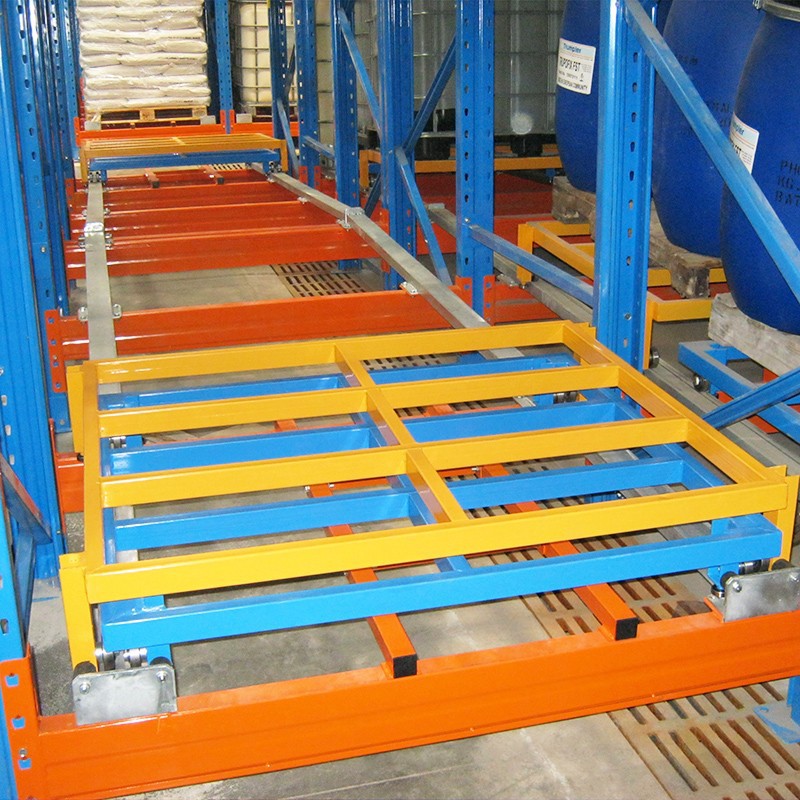
3. Push Back Racking System
The Push Back Racking System is a more advanced type of deep - reach racking. It uses a series of nested carts that allow pallets to be stored up to four or more deep. When a new pallet is loaded, it pushes the existing pallets back, creating a last - in, first - out (LIFO) storage system. This type of racking is suitable for high - volume storage of similar products, where space utilization is a priority.
4. Four Pallet Deep Push Back Racks Pallets
The Four Pallet Deep Push Back Racks Pallets offer even greater storage density. With four pallets stored in a single bay, this system can significantly increase the storage capacity of your warehouse. However, it also requires careful planning and management to ensure efficient inventory rotation.
5. Two Pallet Deep Push Back Racking
The Two Pallet Deep Push Back Racking provides a balance between storage density and accessibility. It allows for two pallets to be stored in each bay, with the ability to access the pallets at the front easily. This type of racking is often used in applications where a moderate level of inventory rotation is required, and space is a concern.
Choosing the Right Depth for Your Business
When choosing the standard depth of pallet racking for your business, it's important to consider the factors mentioned above. Here are some steps to help you make the right decision:
1. Assess Your Storage Needs
Start by evaluating your current and future storage requirements. Consider the volume of inventory, the size and weight of the pallets, and the frequency of access. This will help you determine the appropriate storage density and the number of pallets you need to store.
2. Analyze Your Material Handling Equipment
Understand the capabilities and limitations of your material handling equipment. Make sure that the racking depth you choose is compatible with your forklifts, pallet jacks, or other equipment. This will ensure smooth and efficient operation in your warehouse.
3. Consider Your Inventory Management System
Decide whether you need a FIFO or LIFO inventory management system. If you require FIFO, shallower racking systems may be more suitable. If LIFO is acceptable, deeper racking systems can provide higher storage density.
4. Consult with a Professional
As a pallet racking supplier, I recommend consulting with a professional who has experience in designing and installing pallet racking systems. They can help you assess your needs, recommend the appropriate racking depth, and ensure that the system is installed correctly.
Conclusion
The standard depth of pallet racking is a crucial factor in optimizing your warehouse storage. By considering the pallet size, storage density requirements, material handling equipment, and product characteristics, you can choose the right depth for your business. Whether you opt for single - pallet deep, double - pallet deep, or a more advanced push - back racking system, the key is to balance storage capacity with accessibility.
If you're in the process of planning a new warehouse or upgrading your existing pallet racking system, I encourage you to reach out for a consultation. Our team of experts can help you design a customized pallet racking solution that meets your specific needs and budget. Don't hesitate to contact us to discuss your requirements and start the journey towards a more efficient and organized warehouse.
References
- "Warehouse Design and Management" by Edward F. Frazelle
- "Material Handling Handbook" by the Material Handling Industry of America


