
Hey there! As a supplier of push - back pallet racking, I often get asked whether this type of racking is suitable for storing perishable goods. Well, let's dig into it and see if push - back pallet racking is the right fit for keeping those perishable items fresh.
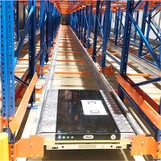
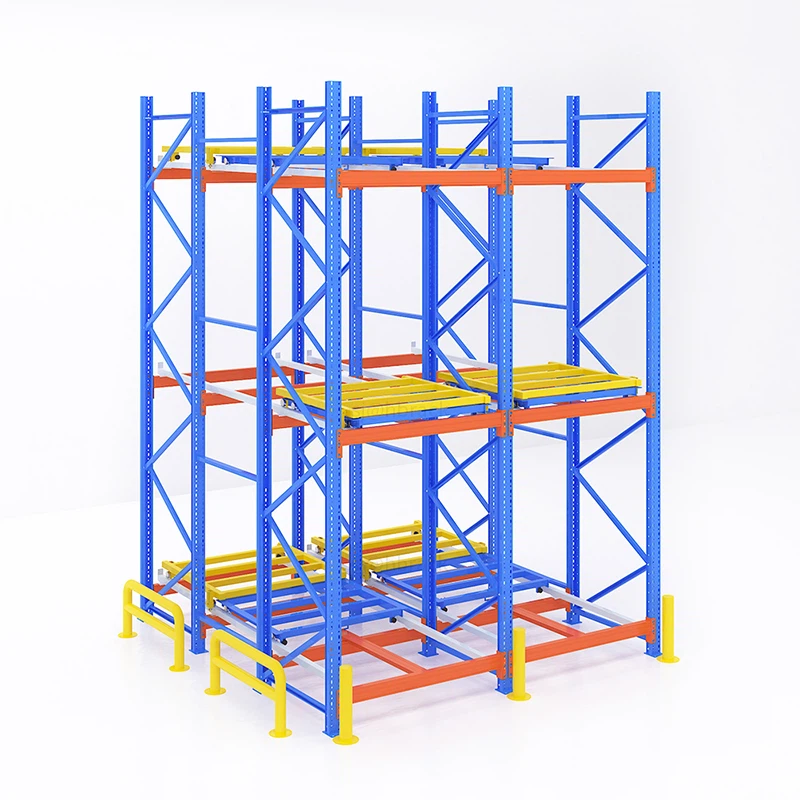
First off, let's understand what push - back pallet racking is. A Push Back Pallet Rack System is a high - density storage solution. It works on a system of nested carts that are mounted on inclined rails. When you load a pallet onto the rack, it pushes the previously loaded pallets back, creating a sort of "last - in, first - out" (LIFO) storage method.
Now, when it comes to perishable goods, the key factors we need to consider are things like inventory rotation, temperature control, and accessibility.
Inventory Rotation
Perishable goods usually have a limited shelf life. You want to make sure that the oldest stock gets used or sold first, which is known as the "first - in, first - out" (FIFO) principle. But push - back pallet racking operates on a LIFO basis. This means that the last pallet loaded into the rack is the first one that can be retrieved.
In some cases, this might not be ideal for perishable goods. For example, if you're storing fresh produce or dairy products, you want to get the older items out first to avoid spoilage. However, there are workarounds. If your inventory turnover is very high and you're constantly restocking, the difference between LIFO and FIFO might not be as significant. You can also plan your inventory management more carefully. For instance, you can load pallets in a way that takes into account the expiration dates, even though the system itself follows LIFO.

Temperature Control
Another important aspect of storing perishable goods is maintaining the right temperature. Push - back pallet racking can be used in cold storage environments. The design of the rack doesn't interfere with the flow of cold air in a significant way. Since the pallets are stacked on carts, there's still some space between them, allowing for air circulation.
However, you need to make sure that the racking system is installed correctly in the cold storage facility. The materials used in the push - back racking should be able to withstand low temperatures without getting brittle or losing their structural integrity. If you're using a Three Pallet Deep Push Back Pallet Racks or Four Pallet Deep Push Back Racks Pallets, proper installation is even more crucial to ensure that all the pallets are exposed to the same temperature conditions.
Accessibility
Accessibility is also a big deal when it comes to perishable goods. You need to be able to quickly get to the pallets when you need them. Push - back pallet racking provides relatively good accessibility compared to some other high - density storage systems. You can access each lane of pallets without having to move other pallets out of the way, except for the ones in the same lane.
But because of the LIFO nature, if you need to access a pallet that's deeper in the rack, you'll have to remove the pallets in front of it first. This can take some time, especially if you have a deep rack like the Four Pallet Deep Push Back Racks Pallets. So, if you have a situation where you need to access individual pallets frequently and quickly, you might need to think about how the LIFO system will affect your operations.
Cost - Effectiveness
Cost is always a factor in any storage decision. Push - back pallet racking can be a cost - effective solution for storing perishable goods, especially if you have a large volume of inventory. The high - density nature of the racking means that you can store more pallets in a given space compared to some other types of racking. This can save you on the cost of renting or building a larger storage facility.
However, you also need to consider the cost of installation and maintenance. Push - back pallet racking is more complex than some basic racking systems, so the installation might cost a bit more. And you need to make sure that the system is well - maintained to prevent any malfunctions that could lead to damage to your perishable goods.
When Push - Back Pallet Racking Can Work Well
Despite the challenges, there are situations where push - back pallet racking can be a great option for storing perishable goods.
If you have a large volume of perishable items with a relatively long shelf life, like some types of frozen foods, the LIFO issue might not be as critical. You can still manage your inventory effectively and take advantage of the high - density storage that push - back racking offers.
Also, if your warehouse layout and operations are set up in a way that can accommodate the LIFO principle, push - back pallet racking can be a good choice. For example, if you have a dedicated area for restocking and a separate area for order picking, you can better manage the flow of inventory.
In conclusion, whether push - back pallet racking is suitable for storing perishable goods depends on your specific circumstances. It has its pros and cons, but with careful planning and proper inventory management, it can be a viable option.
If you're considering using push - back pallet racking for your perishable goods storage, I'd love to have a chat with you. We can discuss your specific needs, the layout of your warehouse, and how we can make the most of this racking system for your business. Feel free to reach out and we can start a conversation about how to optimize your storage solution.
References
- "Warehouse Storage Systems: Design and Evaluation" by John A. White.
- "Inventory Management for Perishable Goods" - Industry white paper.