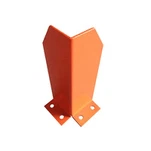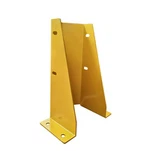

The structure of pallet racks is mainly composed of columns, beams, horizontal braces, horizontal braces and bolts. The columns and beams are connected by bolts to form the frame of the entire rack. This structure is both beautiful and stable. Pallet racks can be assembled at will according to the site conditions, with high flexibility, easy installation and disassembly, and suitable for various warehouse environments.
Specific structural details
Columns and beams: The columns and beams are connected by bolts to form the main frame of the rack. The beams can be adjusted according to the height of the pallet unit goods, and the adjustment distance is usually an integer multiple of 75mm.
Horizontal braces and horizontal braces: These components are used to enhance the stability of the racks and prevent the racks from deforming when subjected to force.
Connectors: Including ordinary bolts, high-strength bolts and chemical anchors, which are used to fix various components to ensure the stability of the racks.
Installation and adjustment methods
The installation and adjustment of pallet racks are very convenient. The position of the beams can be adjusted arbitrarily according to the height of the stacking of items, which makes the racks very flexible. In addition, the spacing between the upper and lower adjacent beams of the shelf can be adjusted according to the height of the goods in the pallet unit, usually set to ≥150mm to ensure safety.
Material selection
The material selection of pallet shelves is also very important. Commonly used materials include Q235 steel, which has strong bearing capacity and good impact resistance and is suitable for use in normal temperature environments. In low temperature environments, special materials such as Q235-D or Q345-E can be selected.